
Talent Intelligence Platform
Talent intelligence platforms helps HR assistants, recruiting specialists and hiring specialists make smarter hiring decisions by turning complex data into actionable insights to map internal career growth opportunities.
Goal
Build a two-sided, data-centric, transparent talent intelligence platform that helps organizations and candidates find through skill-aligned recommendations. The platform is designed to be scalable, flexible, and sold standalone or as part of a suite.
Problem Statement
Talent managers face inefficient workflows while managing a fragmented candidate pool across multiple systems due to lack the information.
Challenges
Data-Rich: Need at-a-glance information
Complex Matching & Transparency: Explain why a candidate matches a role
Two-Sided Experience: Balance needs of employers and candidates in one platform
Scalability: Large volume of job openings and candidates
Cross-System Integration: Ensure smooth interactions across existing systems
Result
Delivered a four-phase release which sold could be standalone or as part of a suite.
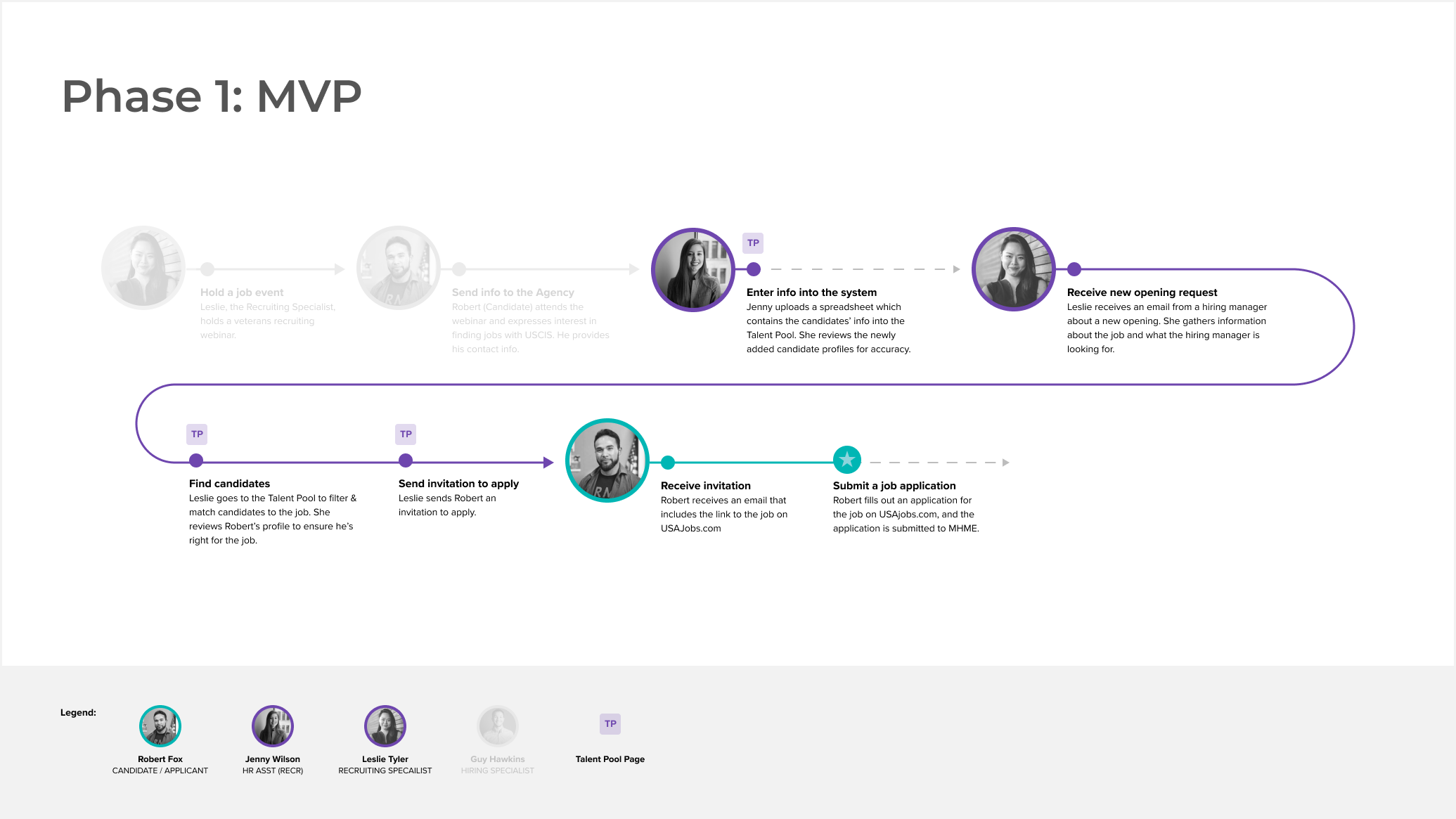
Release 1: Focused on transparency of reports.
Release 2: Added candidate portal and information input and output.
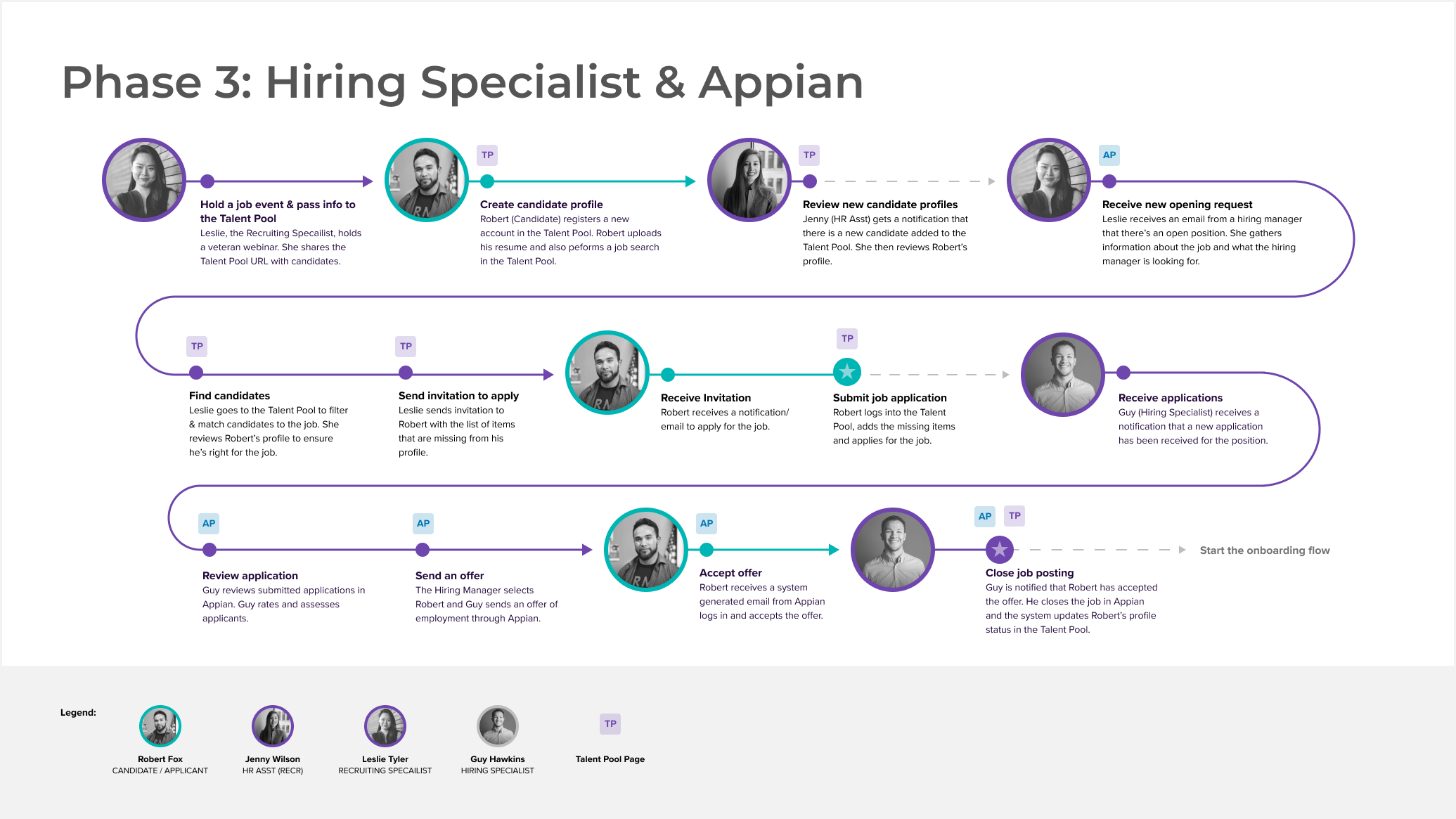
Release 3: Added Hiring Manager support and Appian.
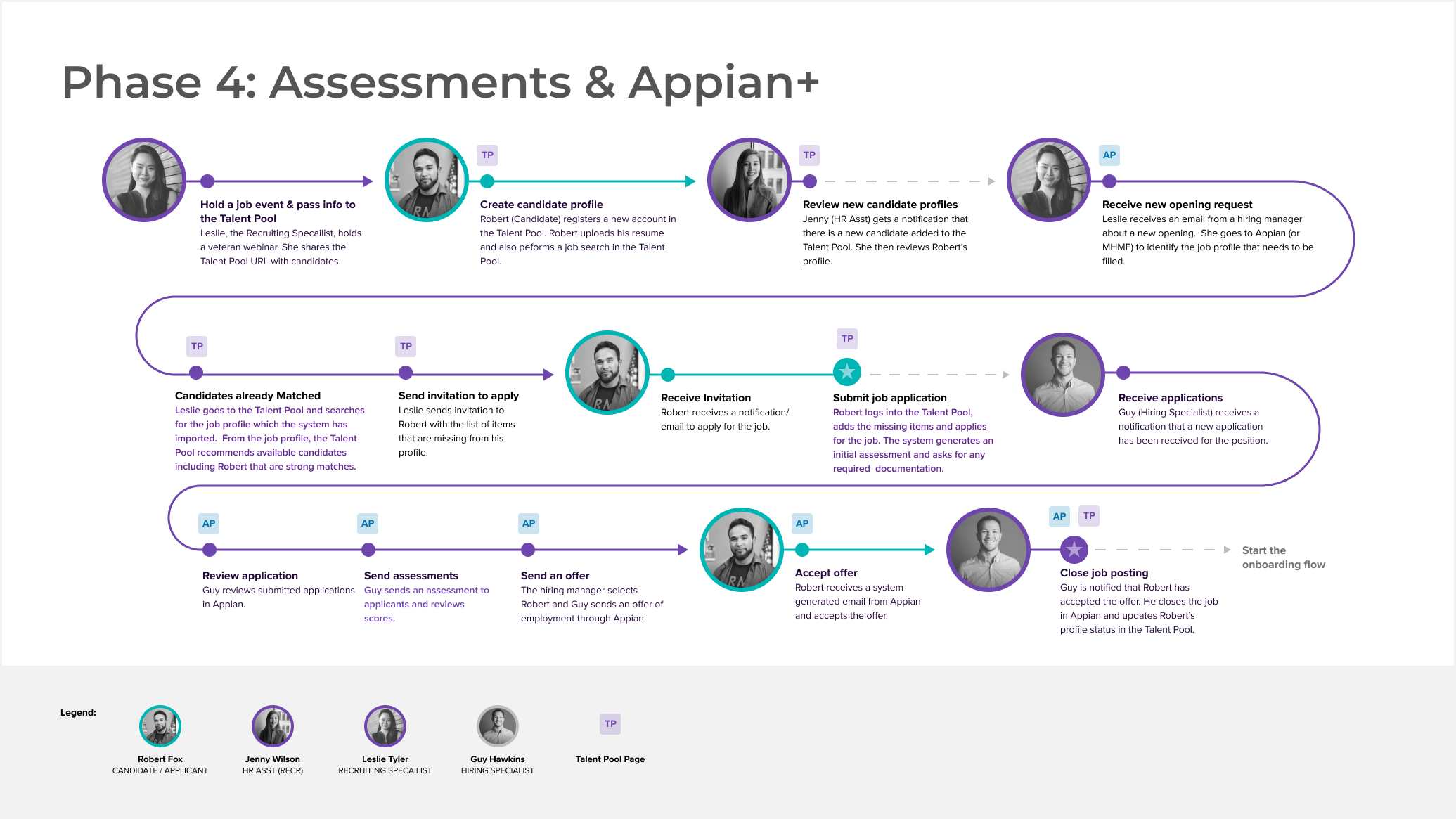
Release 4: Enhanced assessments and Appian.
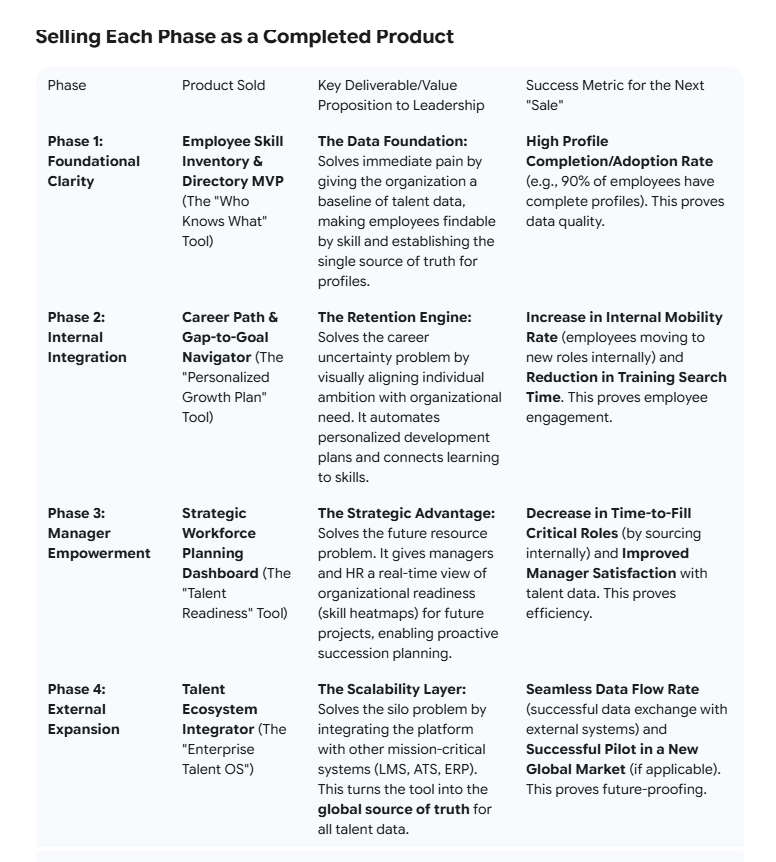
The UX Rationale for Phased Selling
From a UX standpoint, this is the ideal strategy because:
Risk Mitigation: You get early user feedback on the core features (Phase 1 profile building) before investing in the complex logic (Phase 2 skill-gap algorithms).
Continuous Value: Users and leaders don't have to wait two years for a fully polished product; they get tangible, working tools every few months.
Funding Justification: Each phase's success metric justifies the budget for the next phase, turning the project from a large capital expenditure into a series of successful, self-funding initiatives.
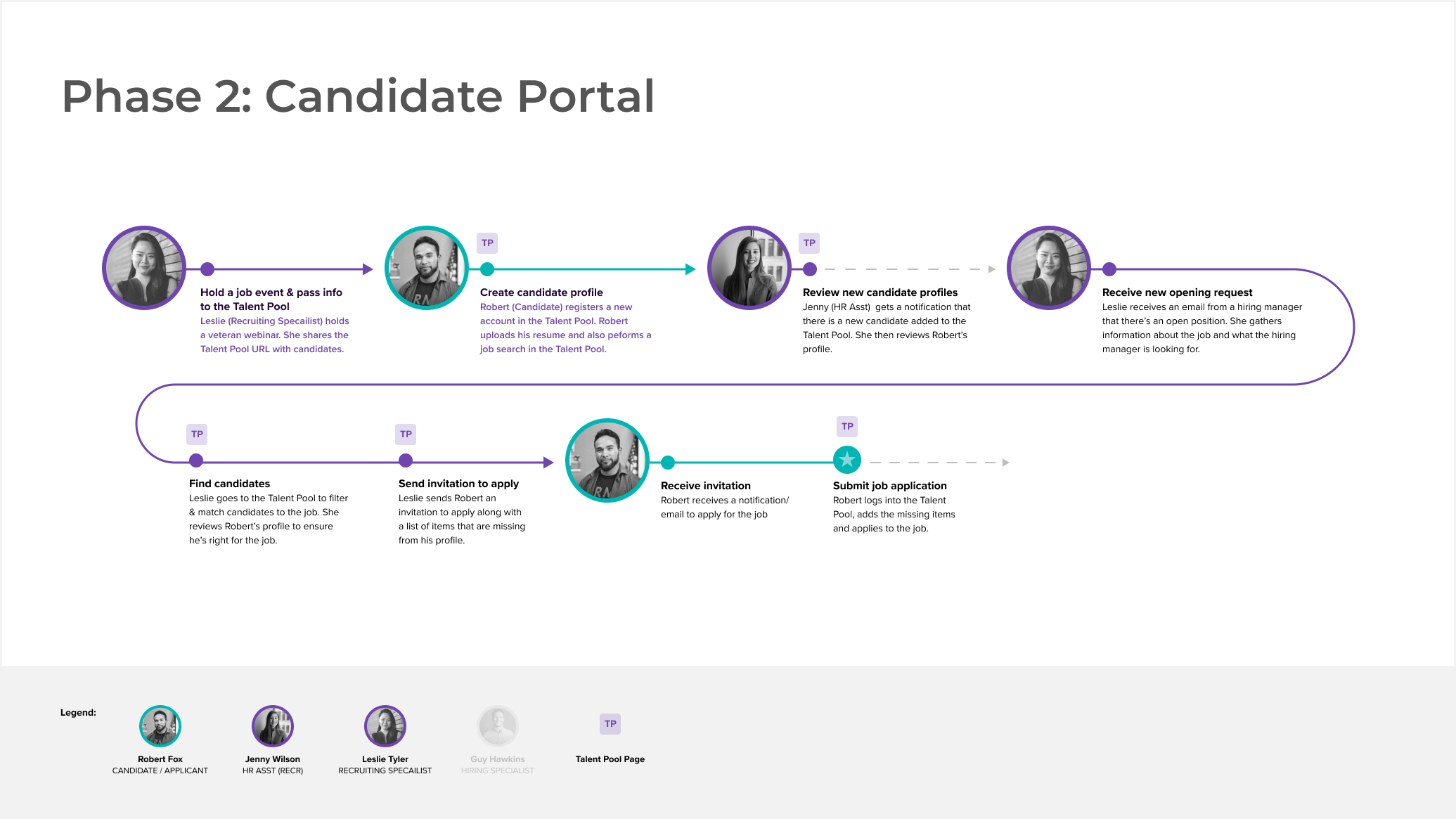
Role-Driven Design Process

Discover
Define Roles

Ideate
Design
The narrative for a portfolio should focus on UX impact and strategic thinking rather than just a chronological list of features. A compelling narrative for your 4-phased Talent Platform should follow the arc of a problem/solution/impact story for each phase, centered on the evolving needs of the users (employees and the organization).
Here is a structured, UX-focused narrative framework you can use for your portfolio, broken down by your four phases:
Phase 1:
Foundational Clarity
UX Objective
Establish a Single Source of Truth for Skills
Features to Highlight
Intuitive Profile Builder: UX efforts focused on making the skill-entry process fast, gamified (e.g., progress bars), and simple, not a dreaded HR form.
Initial Search & Directory: A clean, universal search allowing employees to find colleagues based on skills, not just org charts.
Narrative Focus & Impact
"We needed to make data entry effortless and valuable." The UX success metric was a high profile completion rate (e.g., 90% adoption in 3 months). This laid the foundation for all future phases.
Phase 1
Internal Integration (Focus: Efficiency & Alignment)
UX Objective
Establish a Single Source of Truth for Skills
Features to Highlight
1. Intuitive Profile Builder: UX efforts focused on making the skill-entry process fast, gamified (e.g., progress bars), and simple, not a dreaded HR form. 2. Initial Search & Directory: A clean, universal search allowing employees to find colleagues based on skills, not just org charts.
Narrative Focus & Impact
"We needed to make data entry effortless and valuable." The UX success metric was a high profile completion rate (e.g., 90% adoption in 3 months). This laid the foundation for all future phases.
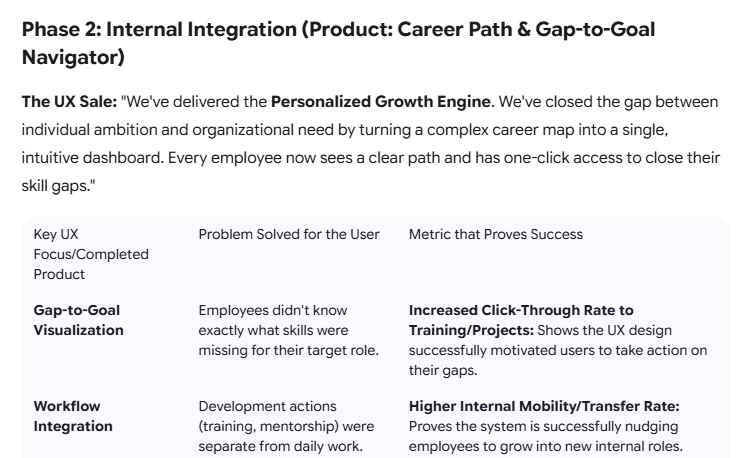
Phase 2: Internal Integration (Focus: Efficiency & Alignment)Internal Integration (Focus: Efficiency & Alignment)
This is your core Skill-Gap and Career Alignment phase. Show how UX connected the dots for the employee.UX Objective
UX Objective
Minimize Skill-Gap Distance & Integrate Workflow
Features to Highlight
1. "Gap-to-Goal" Dashboard: Designing the central UI (like the Circular Progress Bar) to visually map My Current Skills against a Target Role. 2. Integrated Learning & Workflow: UX created seamless interaction from a recognized skill gap (e.g., "Need Python") to an immediate solution (e.g., "Click here for Python Course" or "Click here for Project X that uses Python").
Narrative Focus & Impact
"We turned a scary 'gap' into an actionable plan." The UX success metric was an increase in internal mobility and a measurable decrease in training search time (Workflow Integration).
Phase 3: Manager Empowerment (Focus: Strategic Workforce Planning)
Shift the narrative to how your design gave managers and HR strategic power
UX Objective
Provide Real-Time Organizational Intelligence
Features to Highlight
1. Managerial Heatmap/Dashboard: Designing data visualizations (e.g., Heatmaps) that showed organizational skill readiness and future Succession Gaps at a glance. 2. Team Resourcing Tool: A "drag-and-drop" interface for managers to allocate internal talent to projects based on required skills and employee development goals.
Narrative Focus & Impact
"We elevated HR from administrative task managers to strategic partners." The UX success metric was a reduction in hiring time for critical roles and an increase in 'time-to-fill' efficiency due to better internal sourcing.
Phase 4: Phase 4: External Expansion (Focus: Future-Proofing & Scale)
Future-Proofing and Ecosystem Scalability
UX Objective
Provide Real-Time Organizational Intelligence
Features to Highlight
1. API/System Integration UI: Designing the interface that allows the platform to connect with external systems (e.g., recruiting tools, external learning platforms), ensuring data exchange is stable and reliable. 2. Global/Localization UX: UX decisions for modular components and adaptable layouts to prepare the platform for global rollout and varied regulatory compliance.
Narrative Focus & Impact
"The platform moved from an internal tool to the company's central Talent OS." This phase proves your design thinking is scalable and extensible, looking beyond the immediate user base to the entire enterprise ecosystem.
Conclusion: Key UX Takeaways
End with a summary of the most important things you learned and achieved.
Final Impact: The platform is now the centerpiece of the company's talent strategy, leading to a $\mathbf{15\%}$ increase in internal fulfillment of open positions and an $\mathbf{X\%}$ improvement in employee engagement scores (use real or illustrative metrics).
My Core Insight: The key to enterprise UX is not just making a complex task easy, but making the right strategic decision visible and effortless for the user. (This shows your strategic mind.)
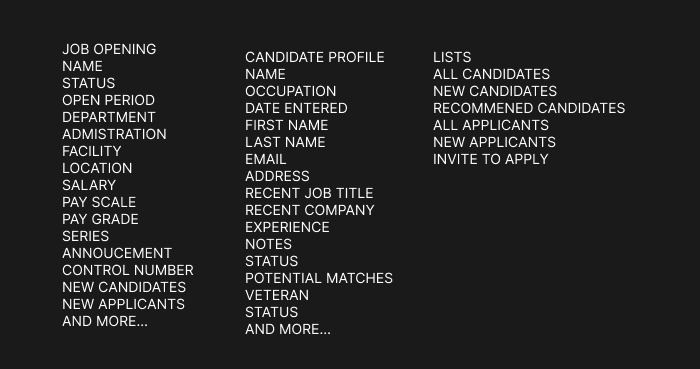
Data-Rich Pages
Each persona needed access to large amounts of data on one screen.
Scanability Difficult to Achieve
Competing data There’s a lot of information that is competing for attention
Daily Power Users
Scalability
With so much information, it was difficult. Each change would have a cascading effect
Information needed to be recognizable at a glance.
Efficiency was key for the daily power users.
Scalability
The UI needed to be scalable as the product grew in the four-phase release and beyond.
INFORMATION SUBSET
Integrated Platforms
New Platform
Although we reviewed the existing personas, we didn’t want to consider just yet how they’d fit into the user flows just yet. Our priority was to design the best possible experience for this product first. Each map defined the optimal experience independently, and by focusing on each persona in isolation, we designed experiences that addressed their unique needs and priorities. For this project, we designed individual workforce roles to optimize responsibilities and workflows, defining each role independently to provide clarity in tasks, goals, and priorities. Next, we examined how tasks and processes aligned across roles, helping define each role clearly while considering a scalable and consistent system.
The end-to-end experience of new and existing candidates acted as a foundation to drive cross-functional alignment and define the scalable product roadmap.

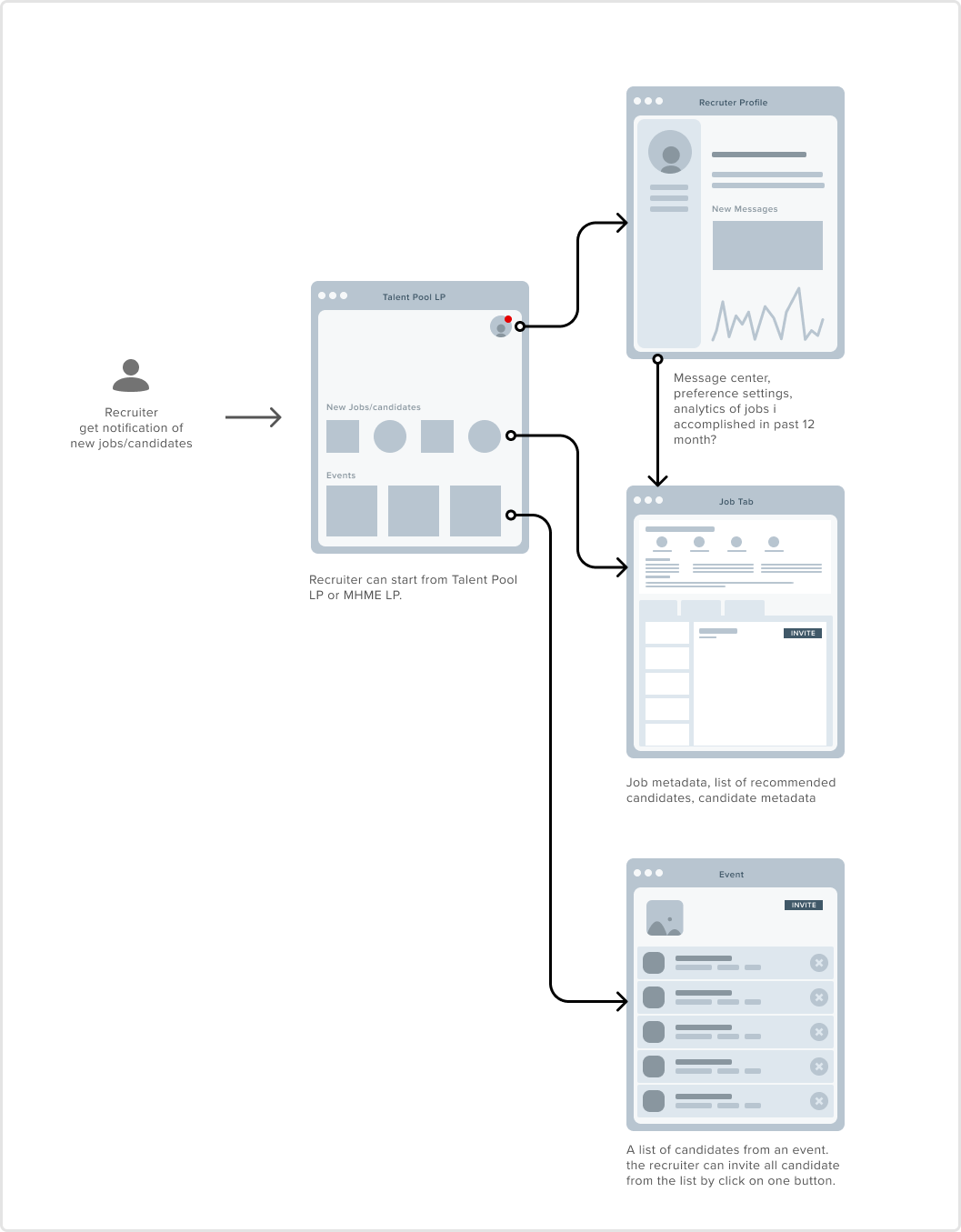
Early discovery mocks to visualize similar high-level flows for one persona
Support Existing Platform
With the foundation in place, we examined how the product could align with the existing platform. This approach allowed us to identify potential connection points, some of which didn’t have a UI, without impacting either product, creating a more cohesive and scalable suite.
Personas in the existing platform had similar overlaps we could support as part of a flexible system.
"We needed to make data entry effortless and valuable." The UX success metric was a high profile completion rate (e.g., 90% adoption in 3 months). This laid the foundation for all future phases.
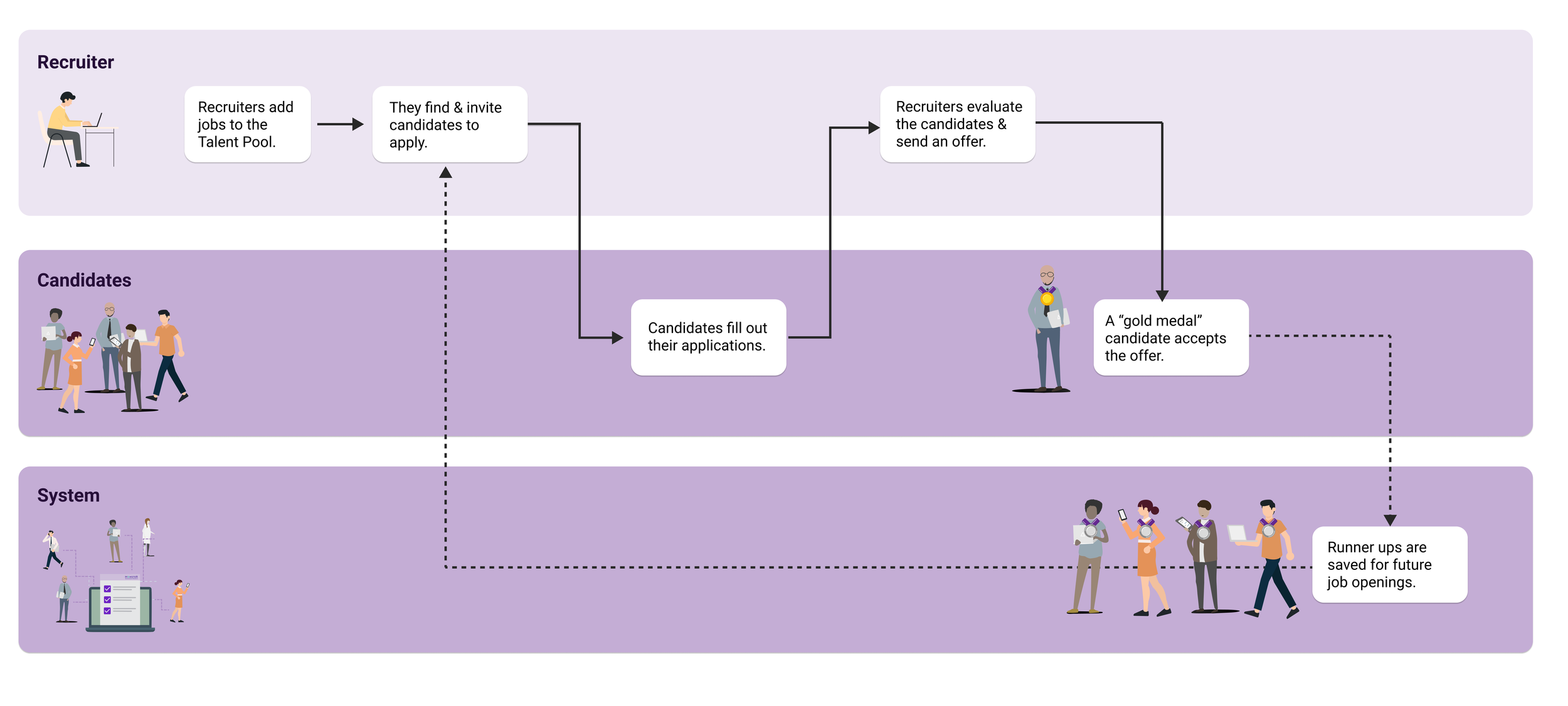
Requirements gathering easier by defining persona flows.
Existing System
Phase 1:
Foundational Clarity
GoalsI
Intuitive Profile Builder: UX efforts focused on making the skill-entry process fast, gamified (e.g., progress bars), and simple, not a dreaded HR form.
Initial Search & Directory: A clean, universal search allowing employees to find colleagues based on skills, not just org charts.
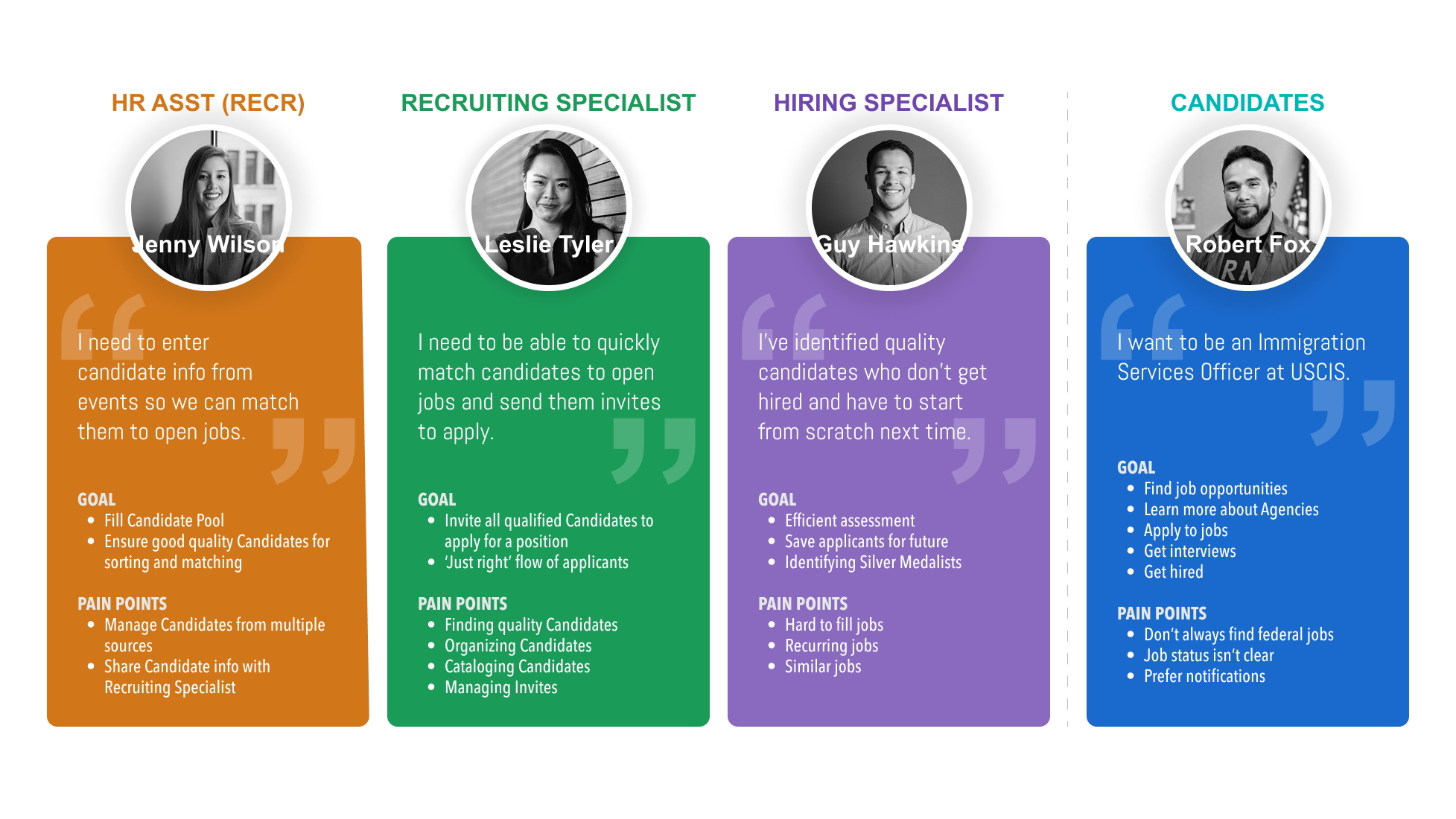
The roles consisted of Hiring Assistants, Recruiting Specialists, Hiring Specialists and Candidates.
MVP Hypothesis
We drafted a potential MVP flow based on the personas and priorities we defined. This hypothesis would serve as a starting point to guide discussions with stakeholders, highlight gaps, and inform decisions about which features to prioritize first. It was intended to evolve as we refined personas, validated assumptions, and gathered feedback, so the MVP addressed the core personas’ needs we defined earlier.
Wireframing
Touchpoints
Determine where multiple personas were seeking the same information or performing similar actions.
We developed micro flows for each persona to map the granular steps of their tasks. This level of detail was important because it allowed us to understand what each user actually needs and prioritize the most important elements of their workflow.
After identifying and prioritizing overlaps, we began designing shared interactions using wireframes. For each touchpoint, we examined where personas’ needs converged, assessed the priority of each overlapping need, and noted areas where there was no overlap at all. This approach allowed us to address the requirements of multiple personas simultaneously and create shared workflows that were coherent and aligned with the priorities of the overlaps.
Hypothesis for MVP
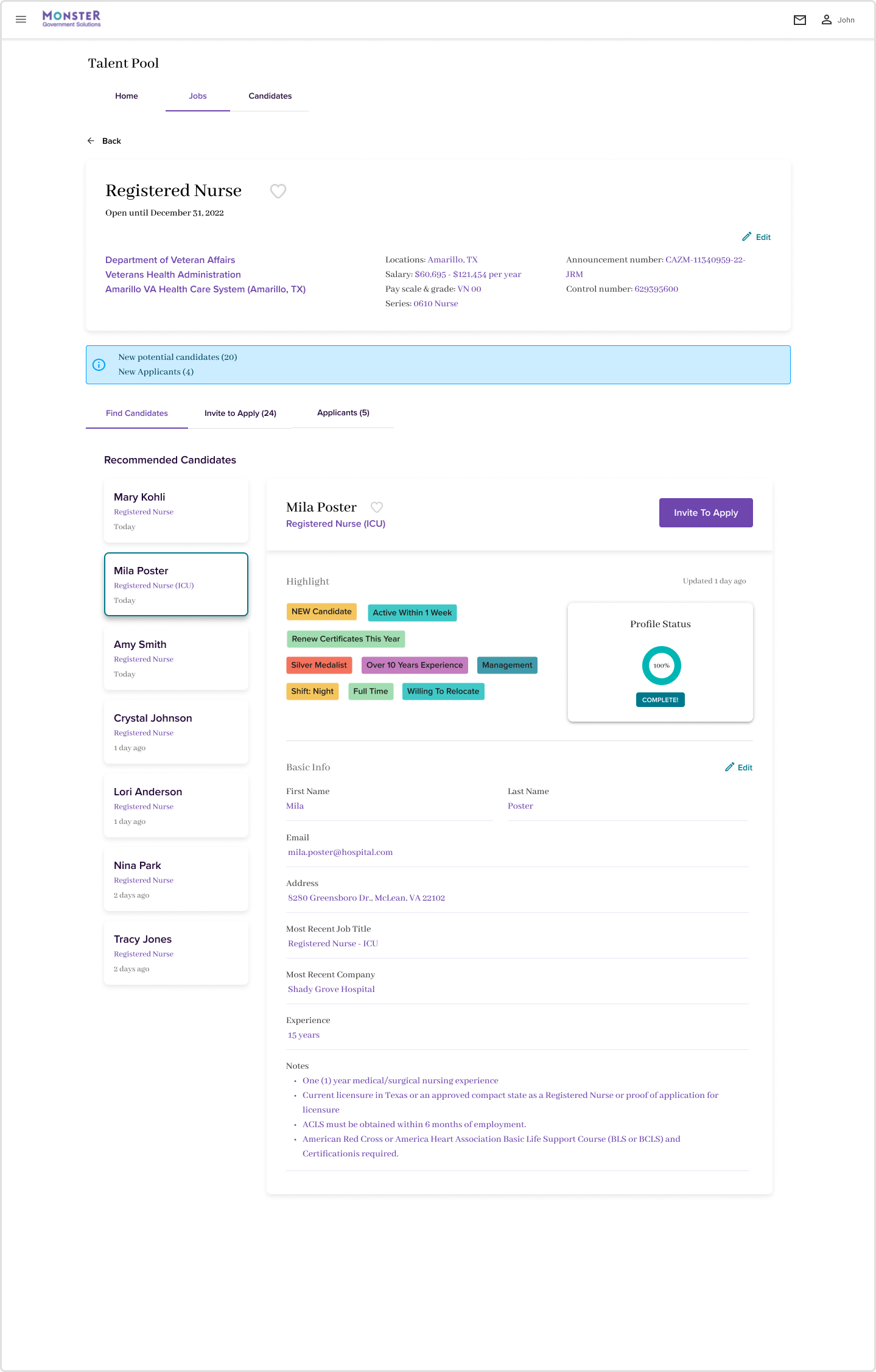
Hypothesis for MVP (validated and used above)
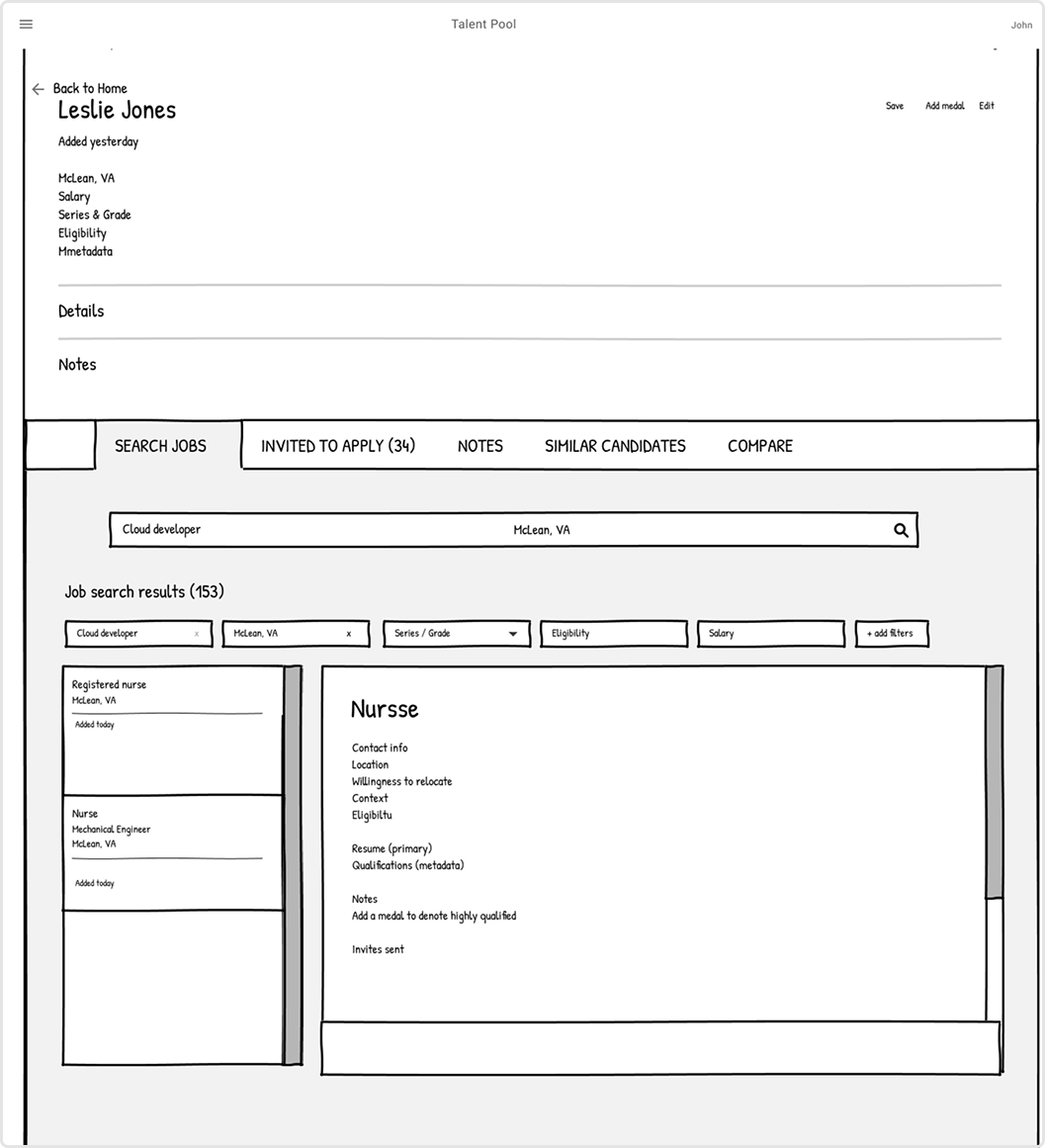
Discovered potential reusable components designed for variation
Defined the priorities for each persona and ideated components to support them.
Final Design & Delivery
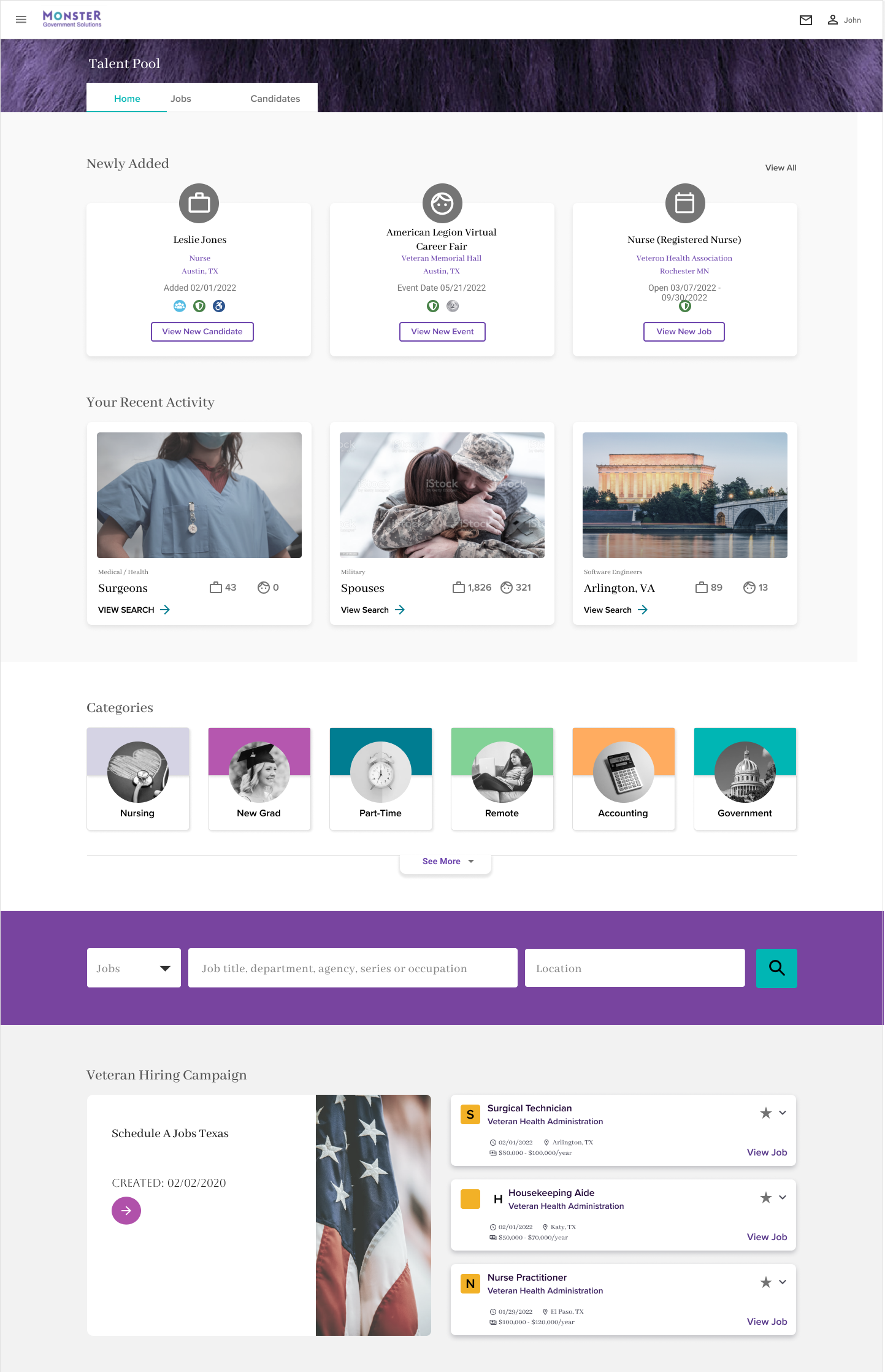
Areas that had data-rich sections while keeping returning candidates engaged.
Early exploration of ways to surface and organize key information.
Initial work targeted the areas of the site visited most often
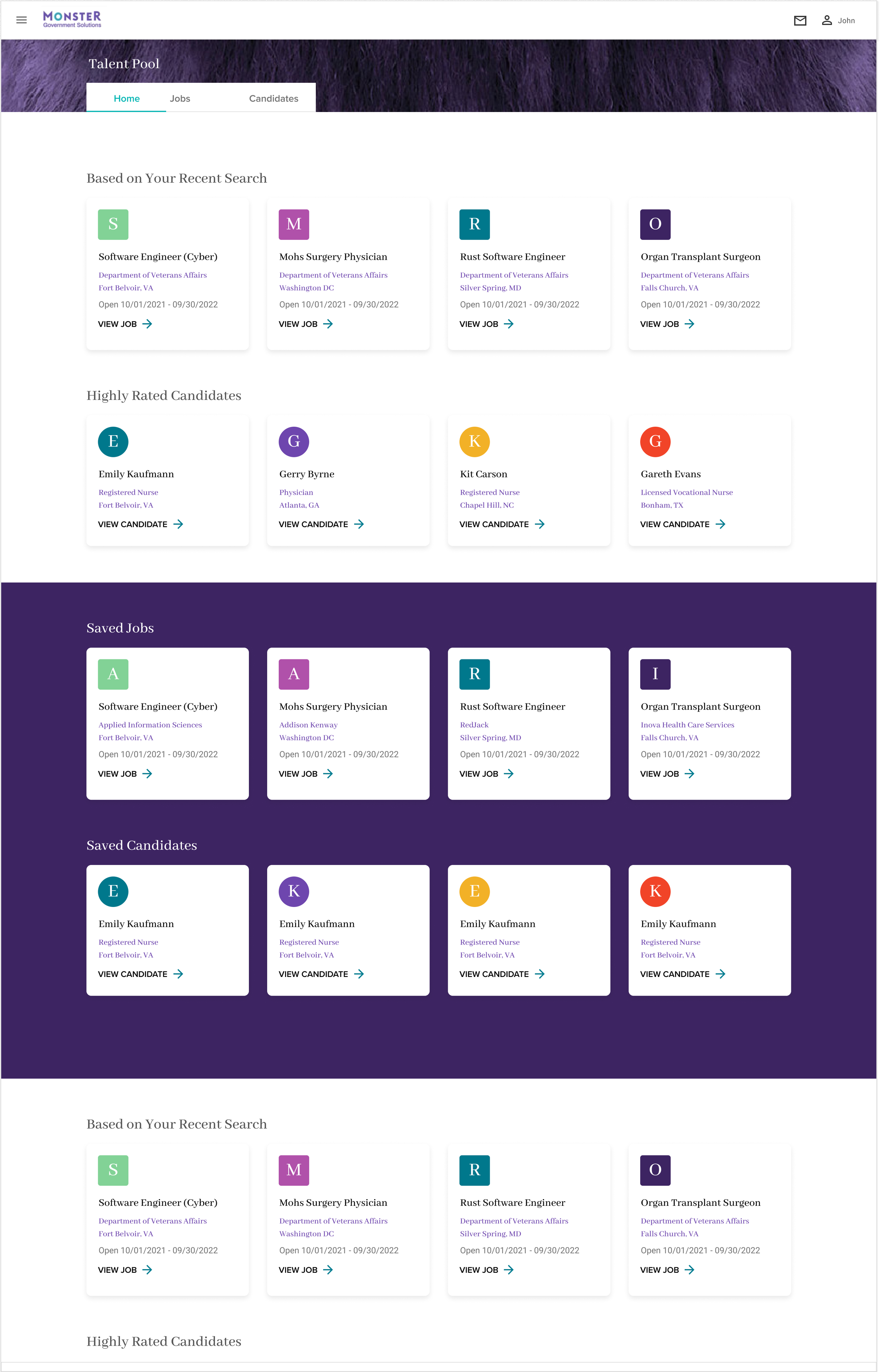
Scannable cards highlighted new information and allowed for deeper exploration
NEXT: Marriott-Starwood Merger