
Talent Intelligence Platform
Talent intelligence platforms help companies make smarter hiring decisions by turning complex data into actionable insights. They help HR assistants, recruiting specialists and hiring specialists identify high-potential candidates to map internal career growth opportunities. The platform enables HR teams to see patterns, predict needs, and design better employee experiences.
Goal
The goal was to build a data-centric, transparent talent intelligence platform that helps organizations and candidates find better, faster matches through skill-aligned recommendations. This two-sided experience serves recruiters, hiring managers, and candidates, evolving from automated, high-efficiency matching into a collaborative intelligence workflow where human insight guides and refines recommendations. The platform is designed to be scalable, flexible, and sold standalone or as part of a suite.
Problem Statement
Talent managers face inefficient workflows while managing a fragmented candidate pool across multiple systems. This makes matching candidates challenging and frustrating for both managers and candidates who lack the information needed to work effectively.
Challenges
Complex Matching & Transparency: Explain why a candidate matches a role
Two-Sided Experience: Balance the needs of employers and candidates in a single platform
Scalability: Design for organizations of varying sizes and volumes of roles
Data Volume: Manage and present large amounts of talent information effectively
Cross-System Integration: Ensure smooth interactions across existing systems
Final Outcome
The core of our MVP was validated, and we began organizing capabilities into logical bundles that delivered immediate value. This approach allowed each persona to gain meaningful benefit from the initial release while establishing a clear foundation for future growth. Subsequent iterations focused on enhancing existing functionality and introducing complementary features that expanded the platform’s role within the broader product suite.
Using a flow-based approach, we structured the platform’s rollout into four phases, each delivering independent value and aligning with the mapped workflows and personas.
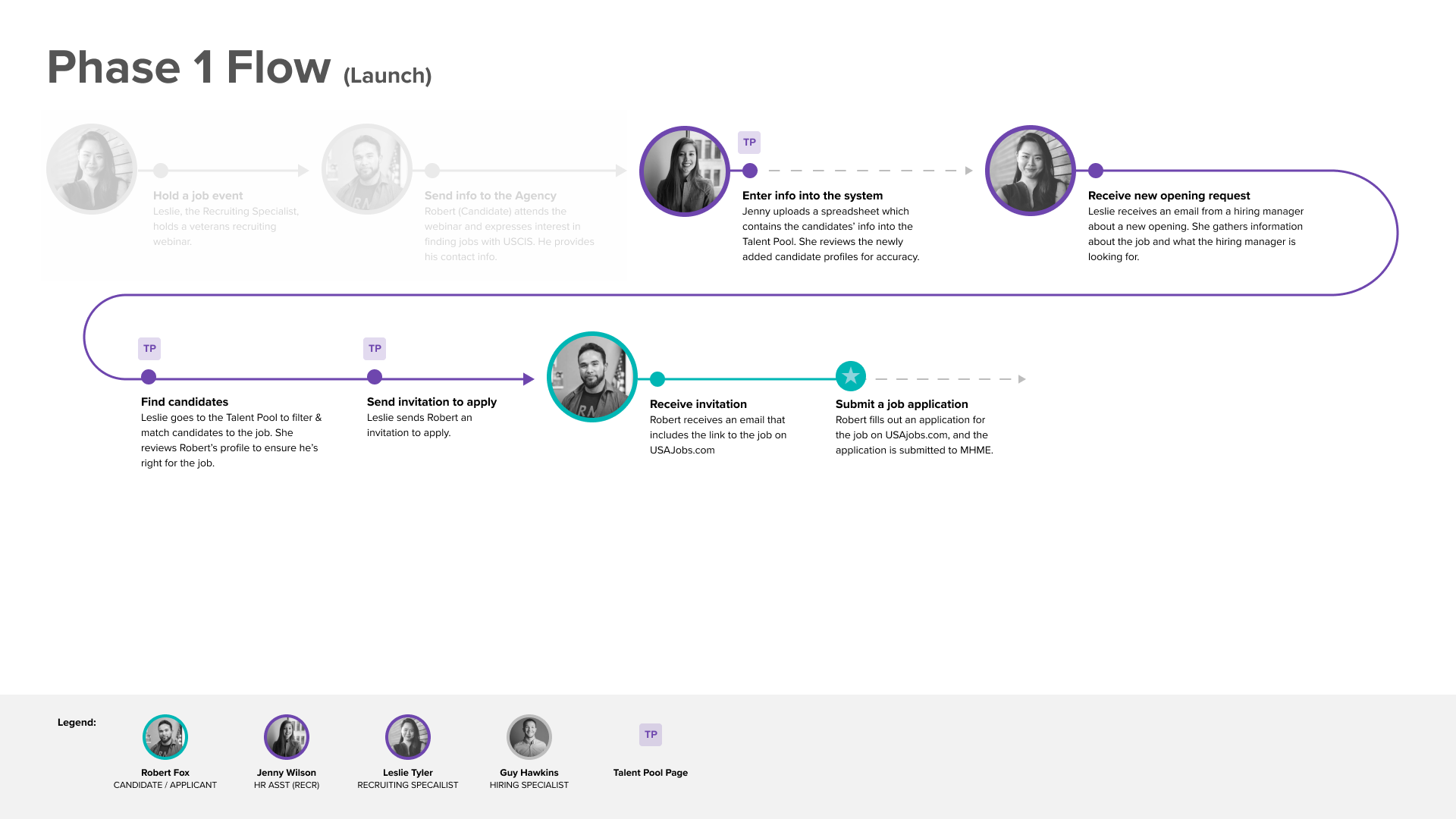
MVP
Core functionality focused on the essential tasks of each persona, establishing the foundation for key workflows and interaction patterns.
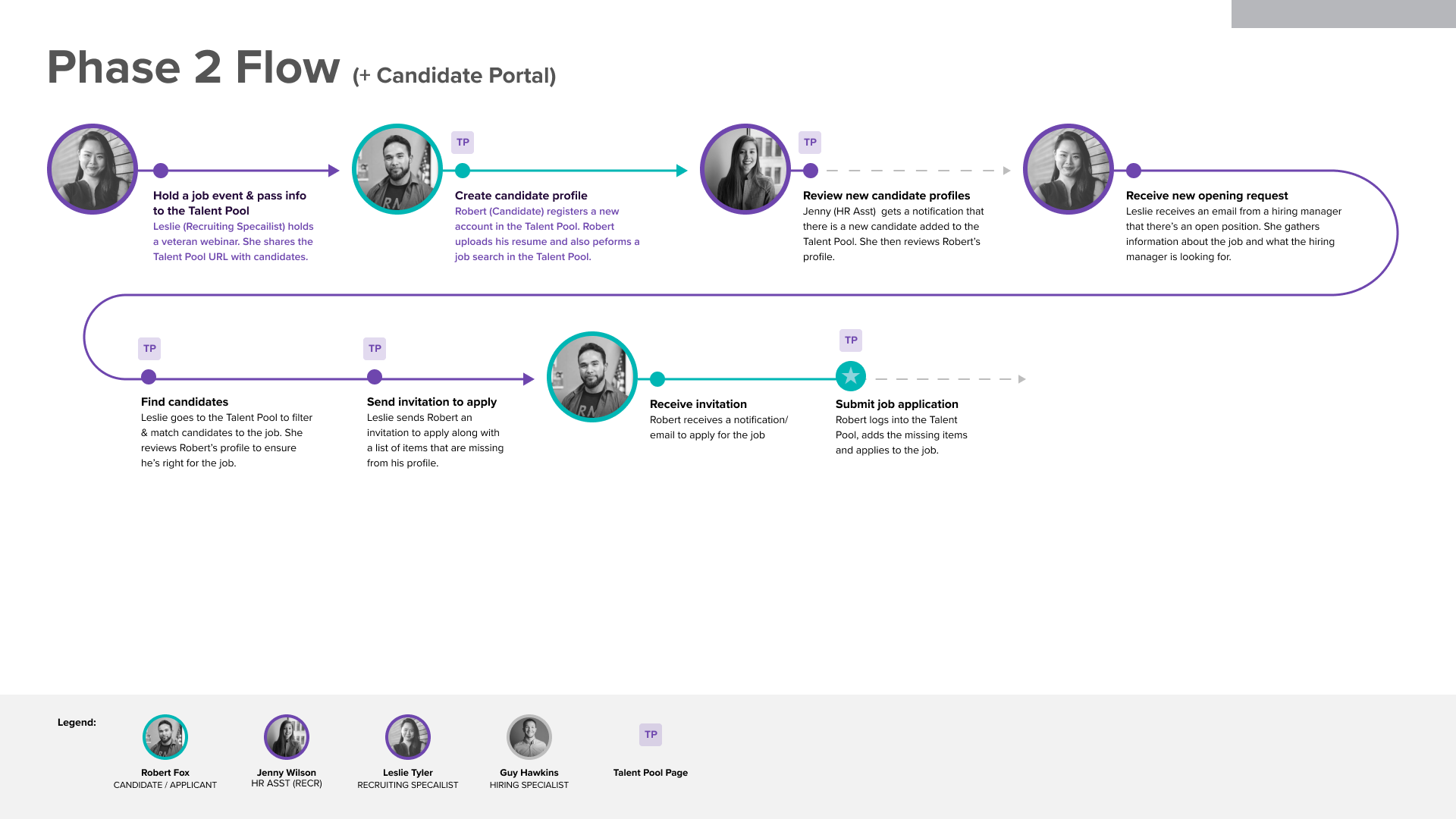
Release 2
Expansion into the broader suite with a focus on the candidate experience, adding depth and visibility to candidate-related insights.

Release 3
Introduction of new parts of the flow to extend end-to-end usability and improve continuity across key tasks.
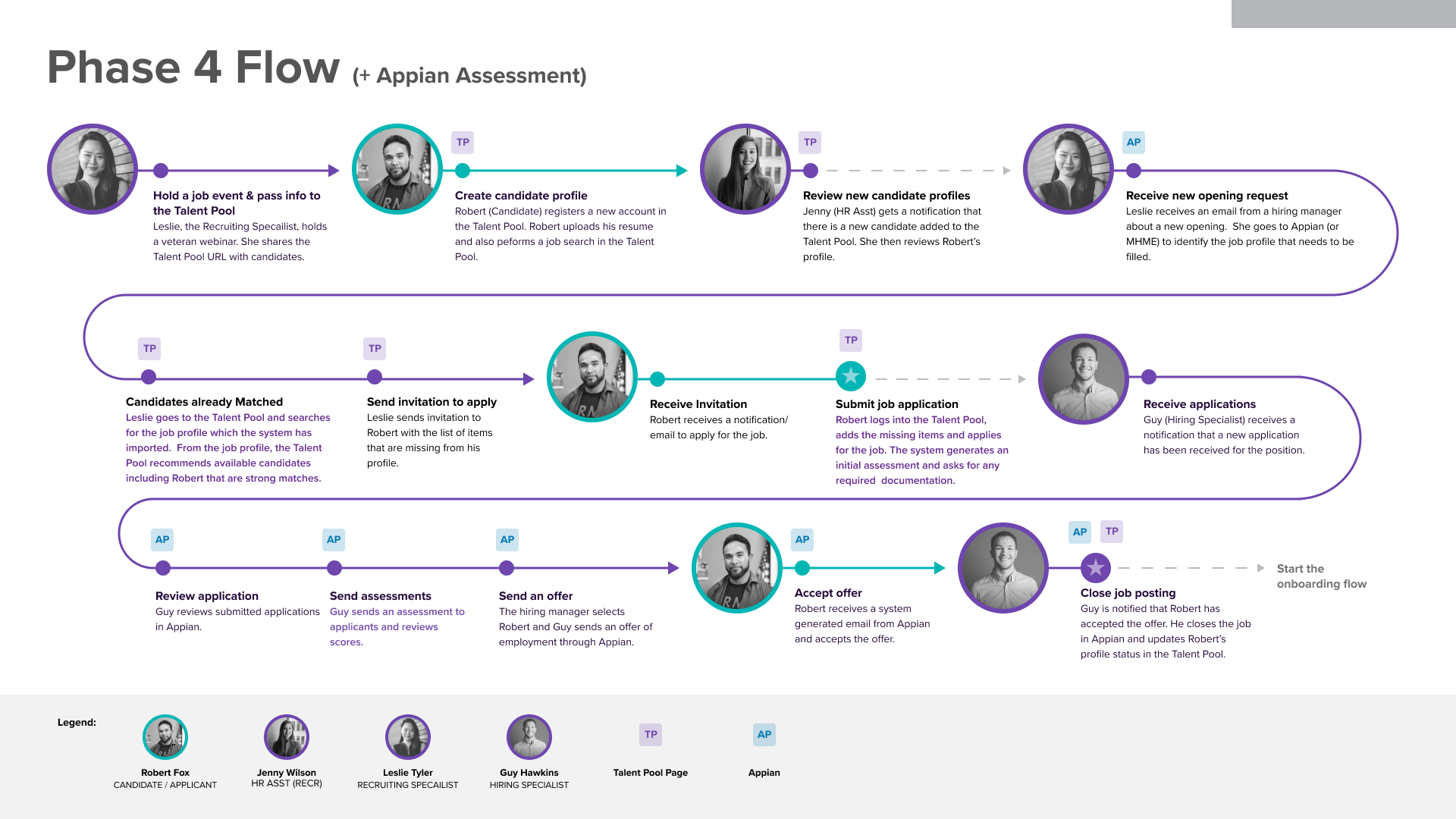
Release 4
A more robust release that strengthens performance and begins integrating with Appian to support scalability and cross-platform alignment.
Design Process

Discover
Define

Ideate
Design
Scope & Personas
Because this product was highly role-centric, we designed specific flows for each persona, clarifying their needs, goals, and responsibilities, and prioritizing the most important features for development.
Existing Personas
We reviewed the personas from the existing platform as part of the new design work. We color-coded goals, responsibilities, and other focus areas to similar overlaps, role-specific needs, and areas we might or might not support. By examining these alongside the newly developed personas, we identified where the new product could also support existing users.
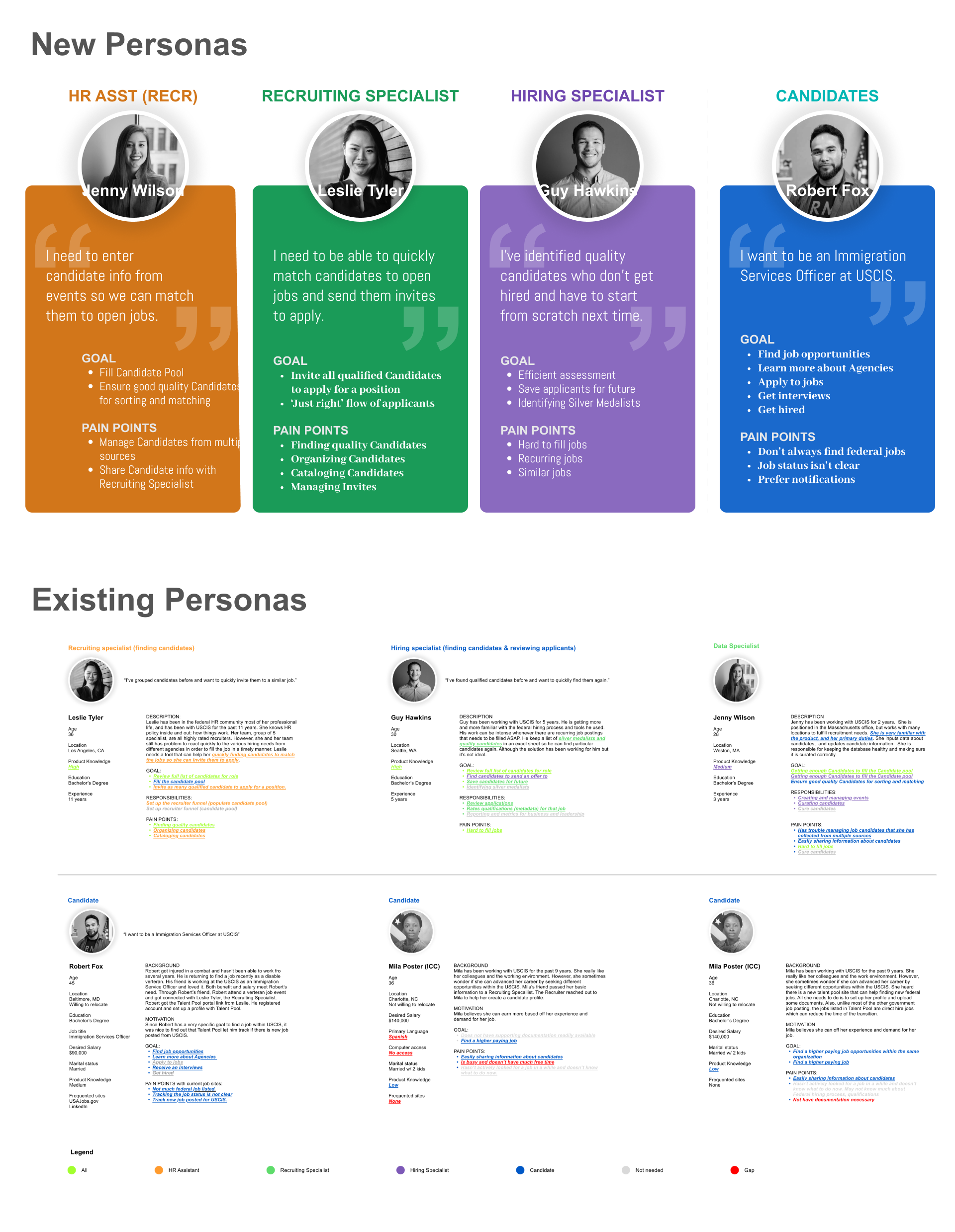
Color-coded areas highlighted where new personas overlapped with existing ones.
User Flows
Existing Platform
Although we reviewed the existing personas, we didn’t want to consider just yet how they’d fit into the user flows just yet. Our priority was to design the best possible experience for this product first.
Journey Maps
For this product, we designed multiple journey maps including existing personas. Each map defined the optimal experience independently, and by focusing on each persona in isolation, we designed experiences that addressed their unique needs and priorities.
Workflow Design
For this project, we designed individual workforce roles to optimize responsibilities and workflows, defining each role independently to provide clarity in tasks, goals, and priorities. Next, we examined how tasks and processes aligned across roles, helping define each role clearly while considering a scalable and consistent system.
Integration with Existing Platform
With the foundation in place, we examined how the product could align with the existing platform. This approach allowed us to identify potential connection points, some of which didn’t have a UI, without impacting either product, creating a more cohesive and scalable suite.
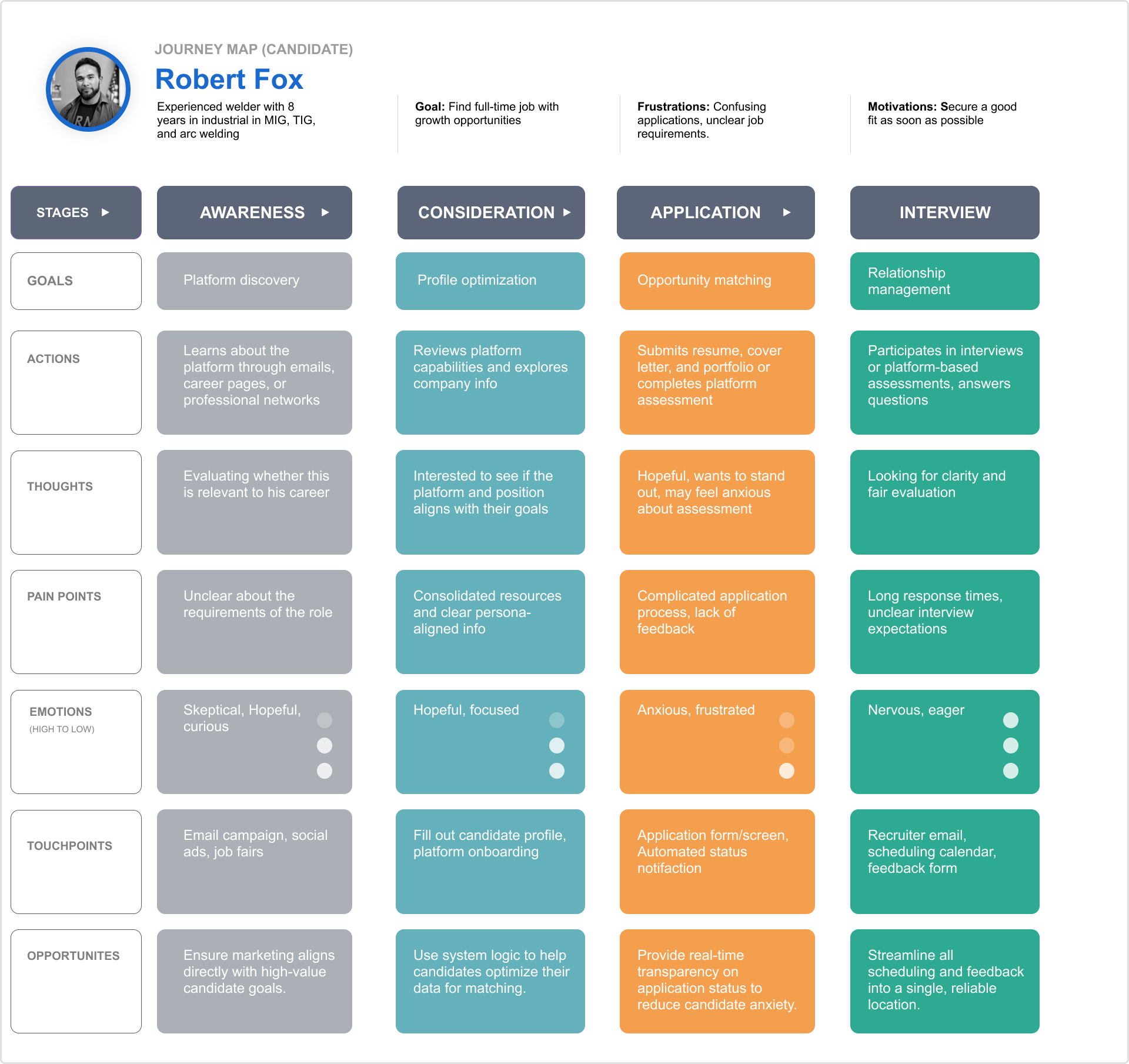
The end-to-end experience of new and existing candidates acted as a foundation to drive cross-functional alignment and define the scalable product roadmap.

Early discovery mocks to visualize similar high-level flows for one persona
MVP Hypothesis
After we were comfortable with user flows, we drafted a potential MVP flow based on the personas and priorities we defined. This hypothesis would serve as a starting point to guide discussions with stakeholders, highlight gaps, and inform decisions about which features to prioritize first. It was intended to evolve as we refined personas, validated assumptions, and gathered feedback, so the MVP addressed the core personas’ needs we defined earlier.
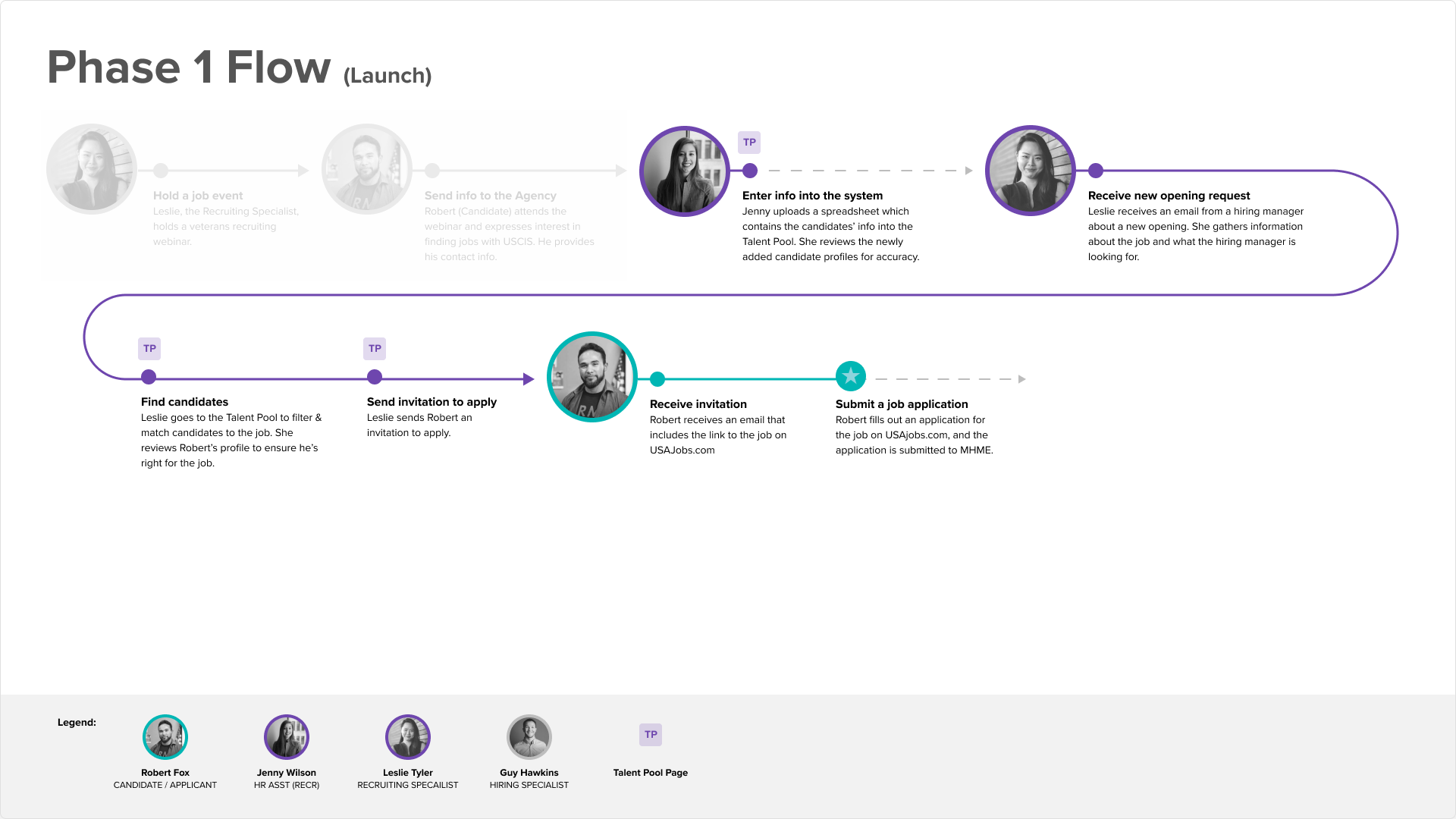
We identified the core product and where significant enhancements could be introduced.
Wireframing
Touchpoints
At each touchpoint, we analyzed both tasks and decision points to determine whether multiple personas were seeking the same information or performing similar actions. Overlaps were prioritized based on frequency and importance, with higher-priority overlaps representing areas where multiple users’ needs converged. We also considered dependencies between personas and the frequency of tasks to ensure that the analysis captured how workflows intersected across the system.
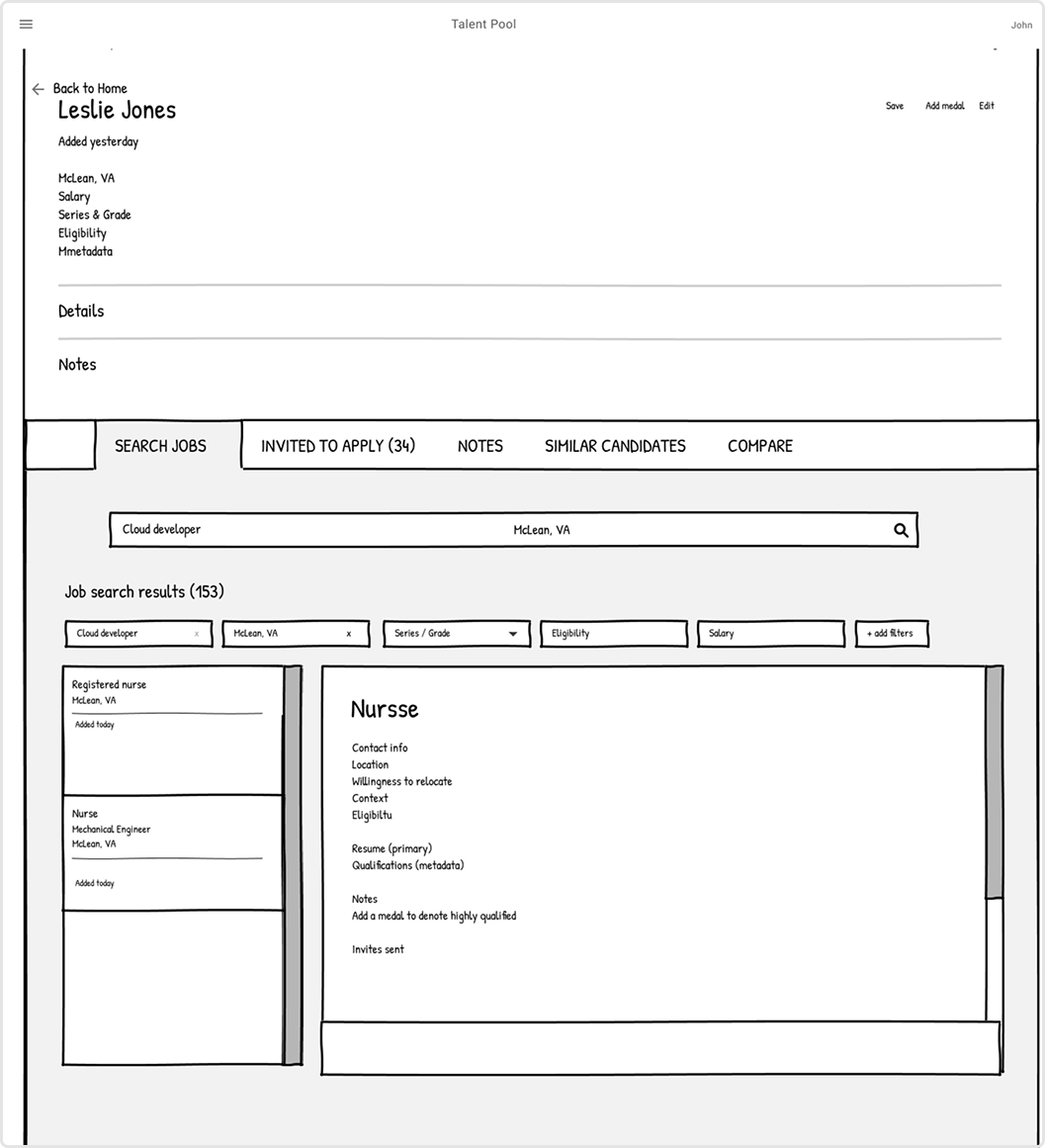
Discovered potential reusable components designed for variation
Defined the priorities for each persona and ideated components to support them.
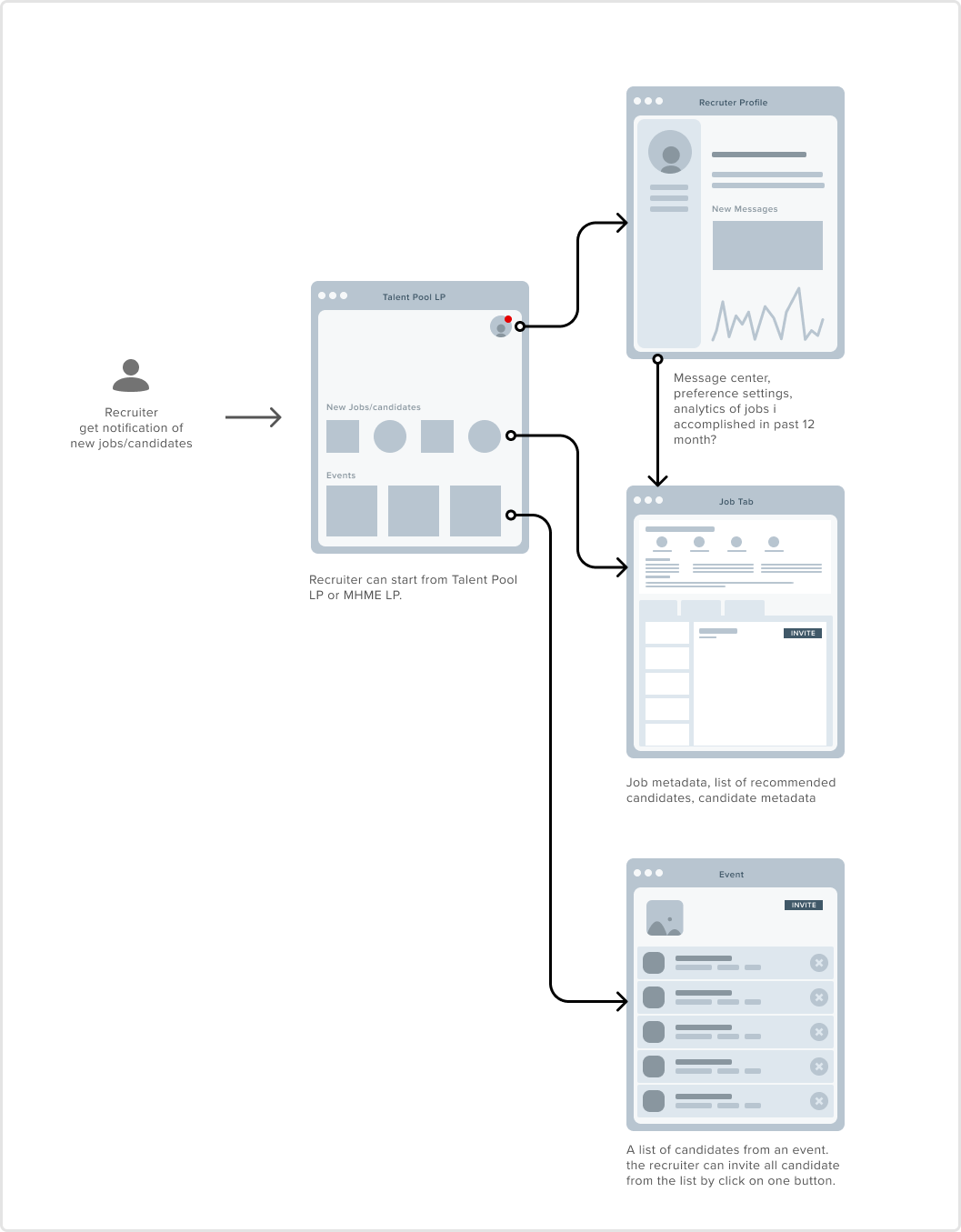
Created mini-screens to better visualize user flows.
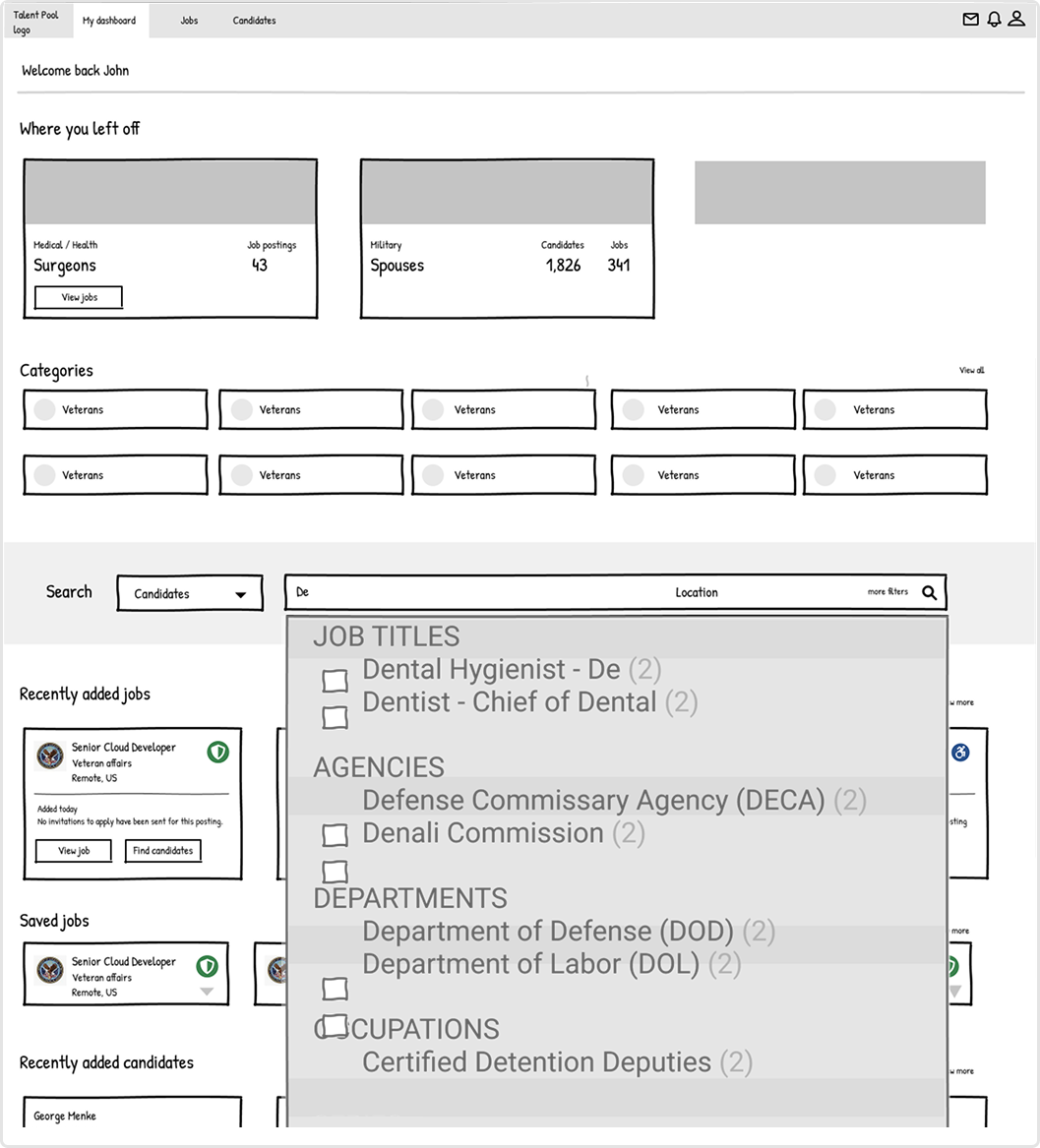
Identified data-rich areas and potential challenges
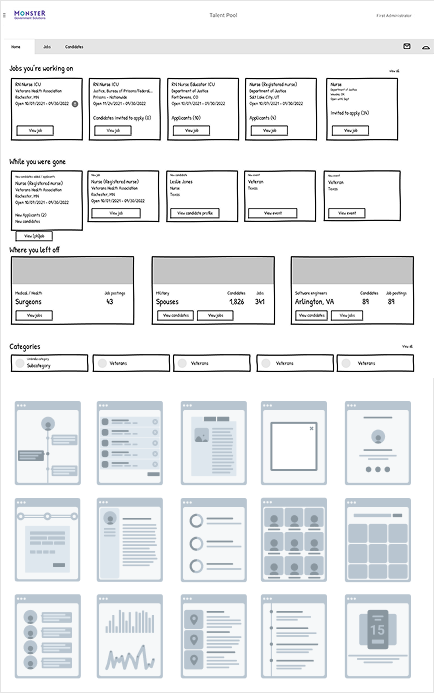
Interaction Design
We developed micro flows for each persona to map the granular steps of their tasks. This level of detail was important because it allowed us to understand what each user actually needs and prioritize the most important elements of their workflow.
After identifying and prioritizing overlaps, we began designing shared interactions using wireframes. For each touchpoint, we examined where personas’ needs converged, assessed the priority of each overlapping need, and noted areas where there was no overlap at all. This approach allowed us to address the requirements of multiple personas simultaneously and create shared workflows that were coherent and aligned with the priorities of the overlaps.
Non-Overlapping Flows
After designing the overlaps, we created basic wireframes of the remaining pages for each persona. These wireframes provided a clearer view of what each persona was doing at every step, and focused on interactions where it was relevant to the happy paths. They also showed how the non-overlapping pages connected to the shared workflows, providing completeness before moving on to high-fidelity mockups.
Final Designs
Once we knew what we were releasing and when, we created high-fidelity mocks of multiple design options generated from the wireframes, designed to be as close to final as possible and nearly ready for development. The goal was to ensure that users had the information they needed readily accessible at each step, supporting their decision-making and task completion.
In developing these mocks, we carefully considered hierarchy, prioritizing the most important information for each persona so that critical content was immediately visible. We also evaluated interaction patterns to confirm that users could efficiently navigate the platform and complete tasks without confusion or unnecessary steps.
The mocks provided a realistic context for both individual and shared workflows, allowing us to visualize how each persona’s needs aligned and where overlaps occurred. This approach enabled us to assess clarity, efficiency, and overall coherence across the platform before moving into iterative refinement.
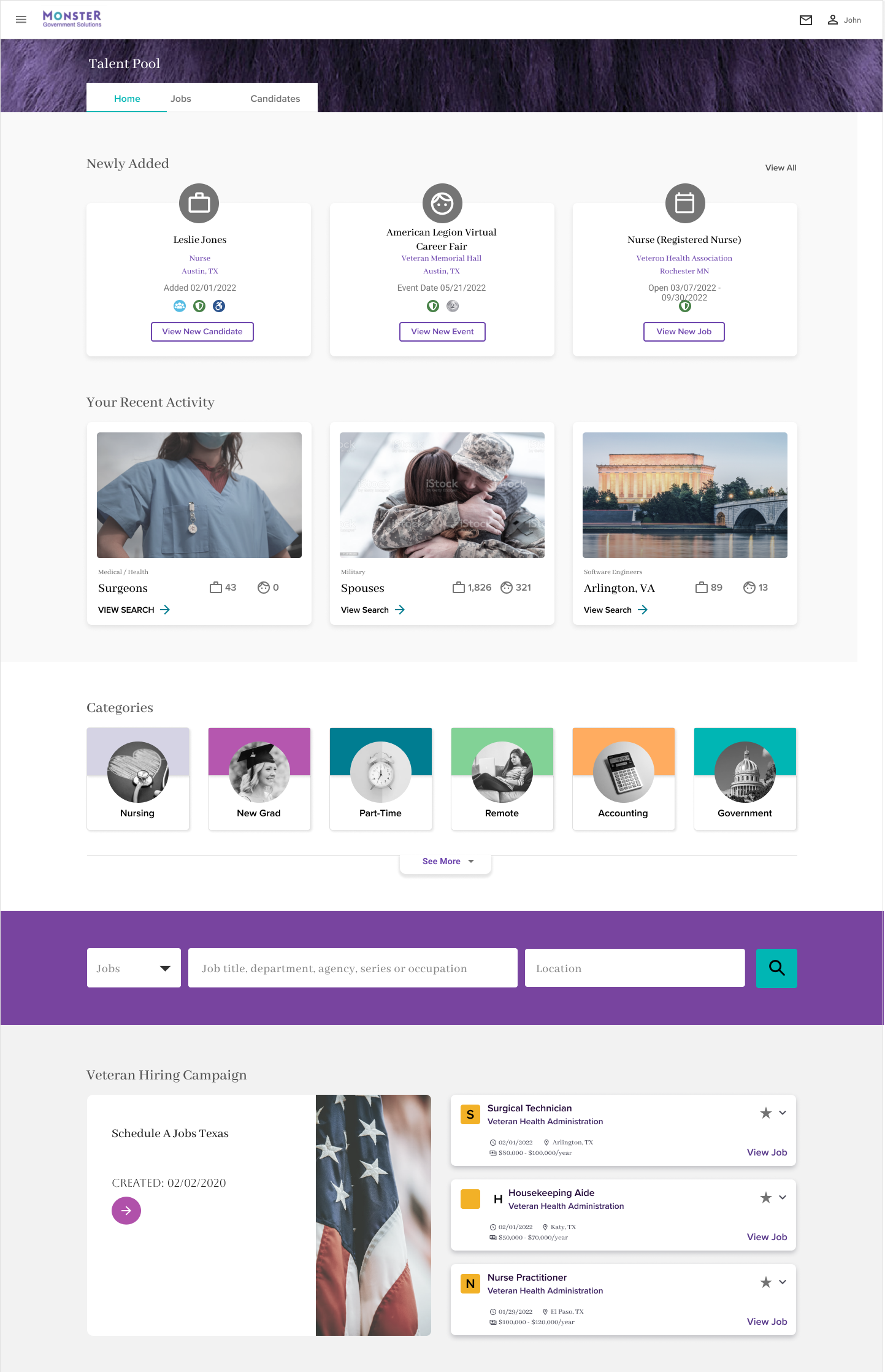
Areas that had data-rich sections while keeping returning candidates engaged.

Early exploration of ways to surface and organize key information.
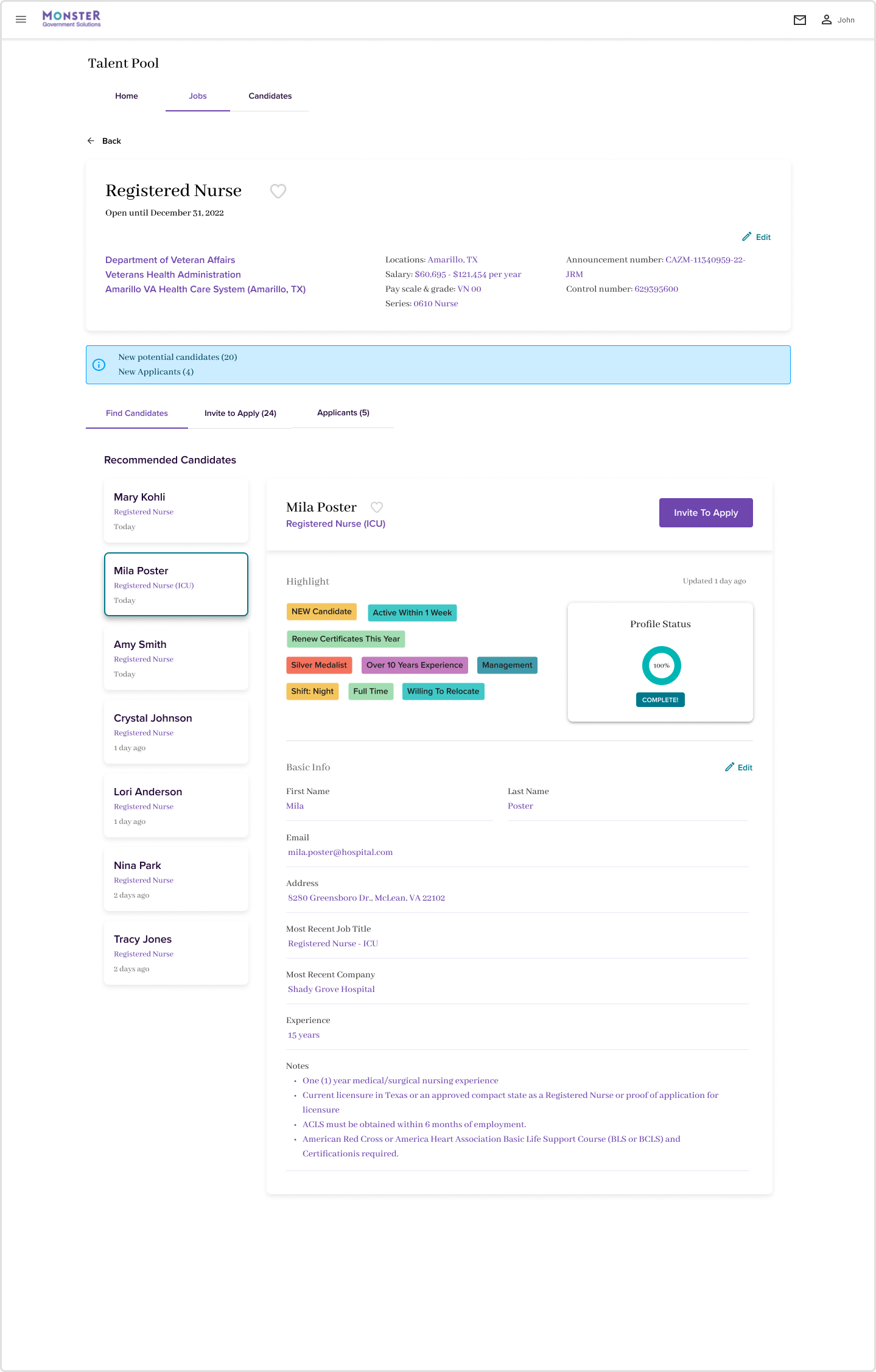
Initial work targeted the areas of the site visited most often
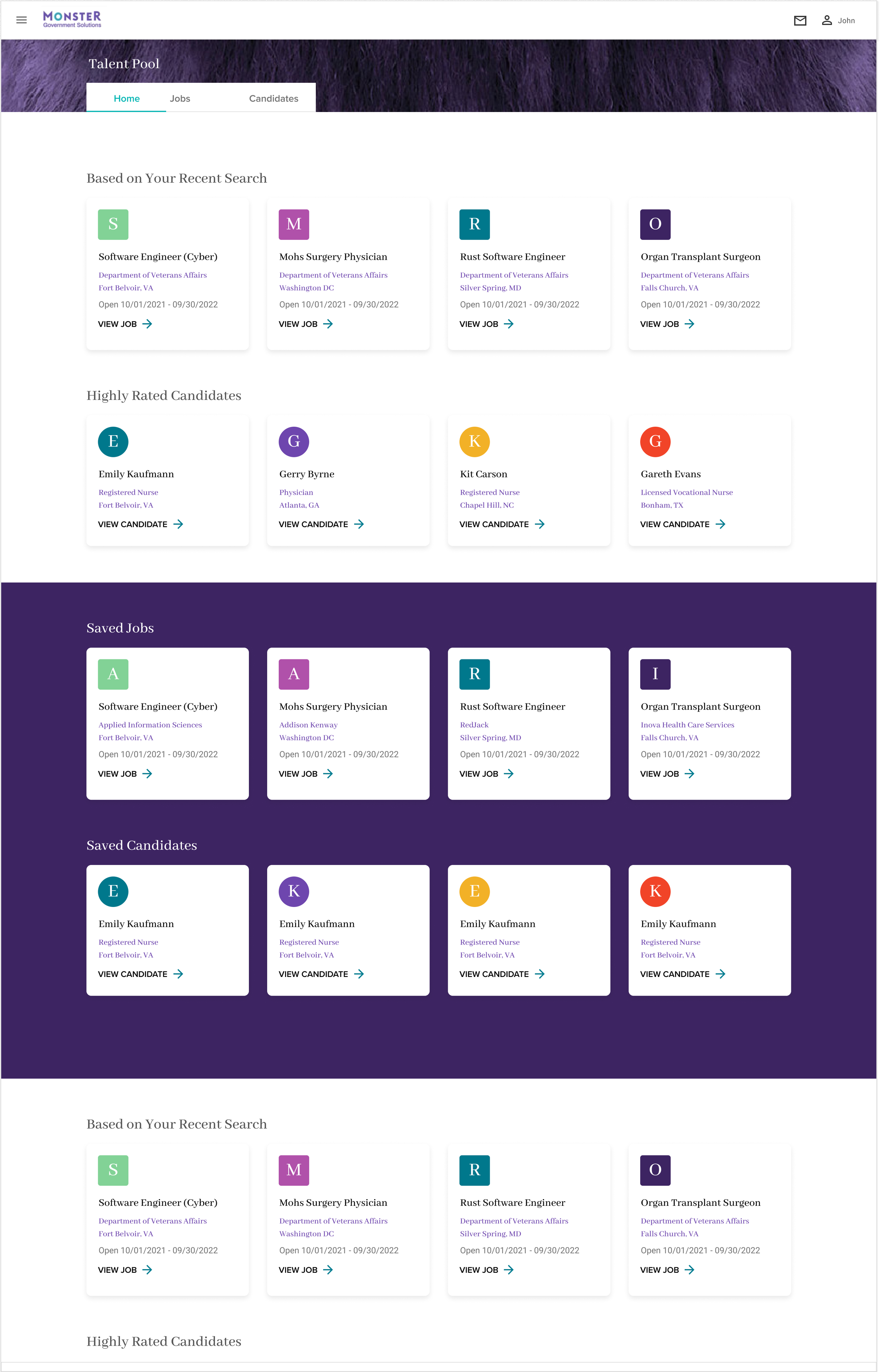
Scannable cards highlighted new information and allowed for deeper exploration
Leadership Review
For this project, we provided stakeholders with regular updates, and their strong understanding of the personas allowed them to follow discussions easily and ask insightful questions. When we were ready, we delivered a final presentation and received approval to proceed with development.
NEXT: Marriott-Starwood Merger