
Talent Intelligence Platform
Talent intelligence platforms connect Recruiting Assistants, Recruiting Specialists and Hiring Specialists, and Candidates by providing shared insights that improve sourcing, evaluation, and decision-making across the hiring process.
Goal
Build a two-sided, data-centric, transparent talent intelligence platform that helps organizations and candidates connect through skill-aligned recommendations. The platform is designed to be scalable and flexible.
Problem Statement
Recruiting Assistants and Specialists manage fragmented candidate and job opening pools resulting in inefficient workflows across multiple systems.
Challenges
Information-Dense Interfaces: Present extensive talent metrics clearly to support quick comprehension.
Candidate-Role Matching Explanation: Clarify why a Candidate aligns with a role to support informed decisions.
Dual-User Perspectives: Balance employer and Candidate workflows without compromising usability.
Integration Across Systems: Ensure smooth interaction with existing HR and recruitment tools.
Handling Large-Scale Data: Maintain clarity and usability as candidate and job volumes grow.
Result
Delivered a four-stage release (two shown for this case study) of a platform that presents complex talent metrics, provides transparent candidate-role matching, and supports both employer and candidate workflows, functioning as a standalone solution or as part of a broader HR suite.

-
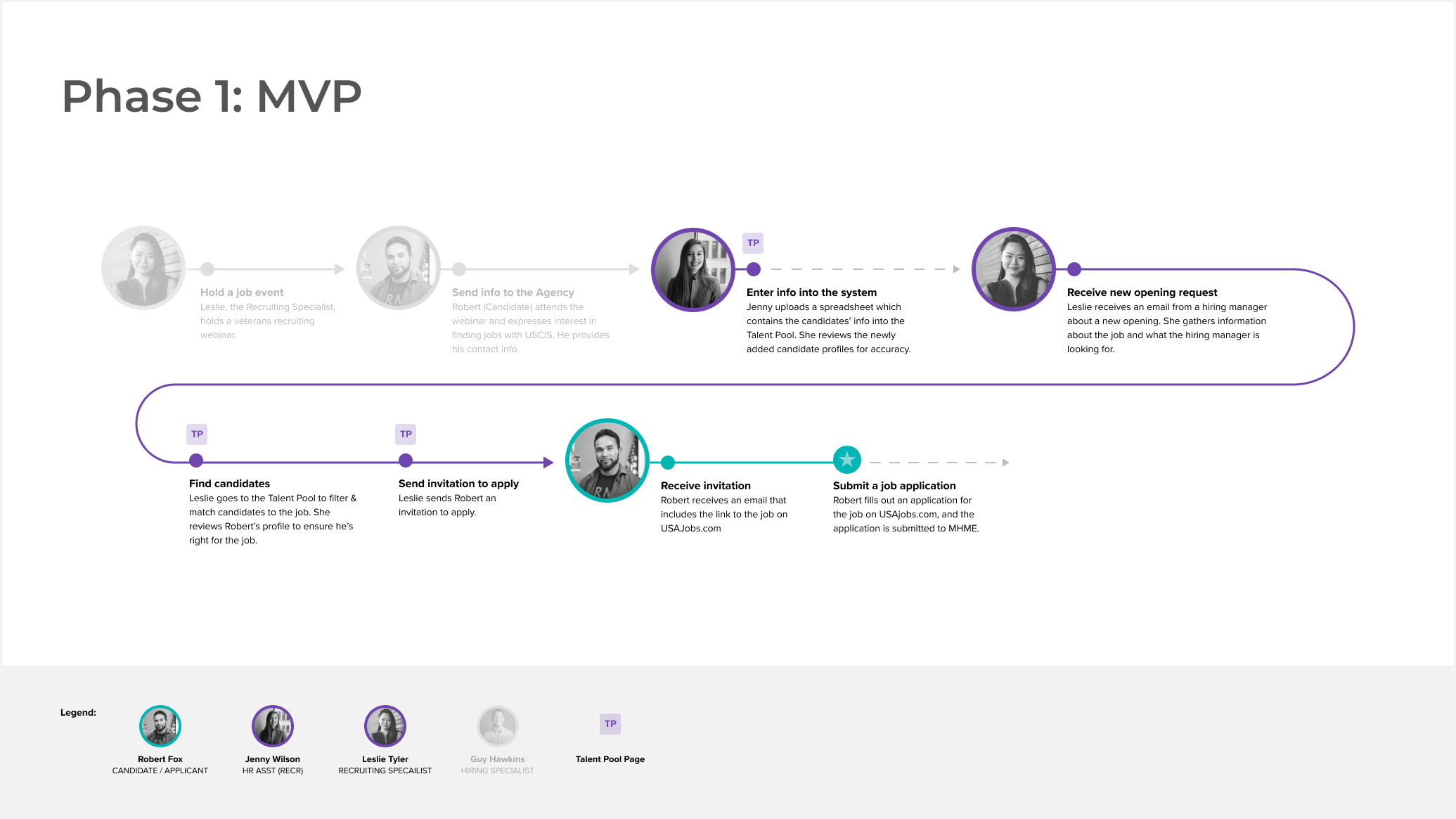
Phase 1: Candidate Application Flow
-
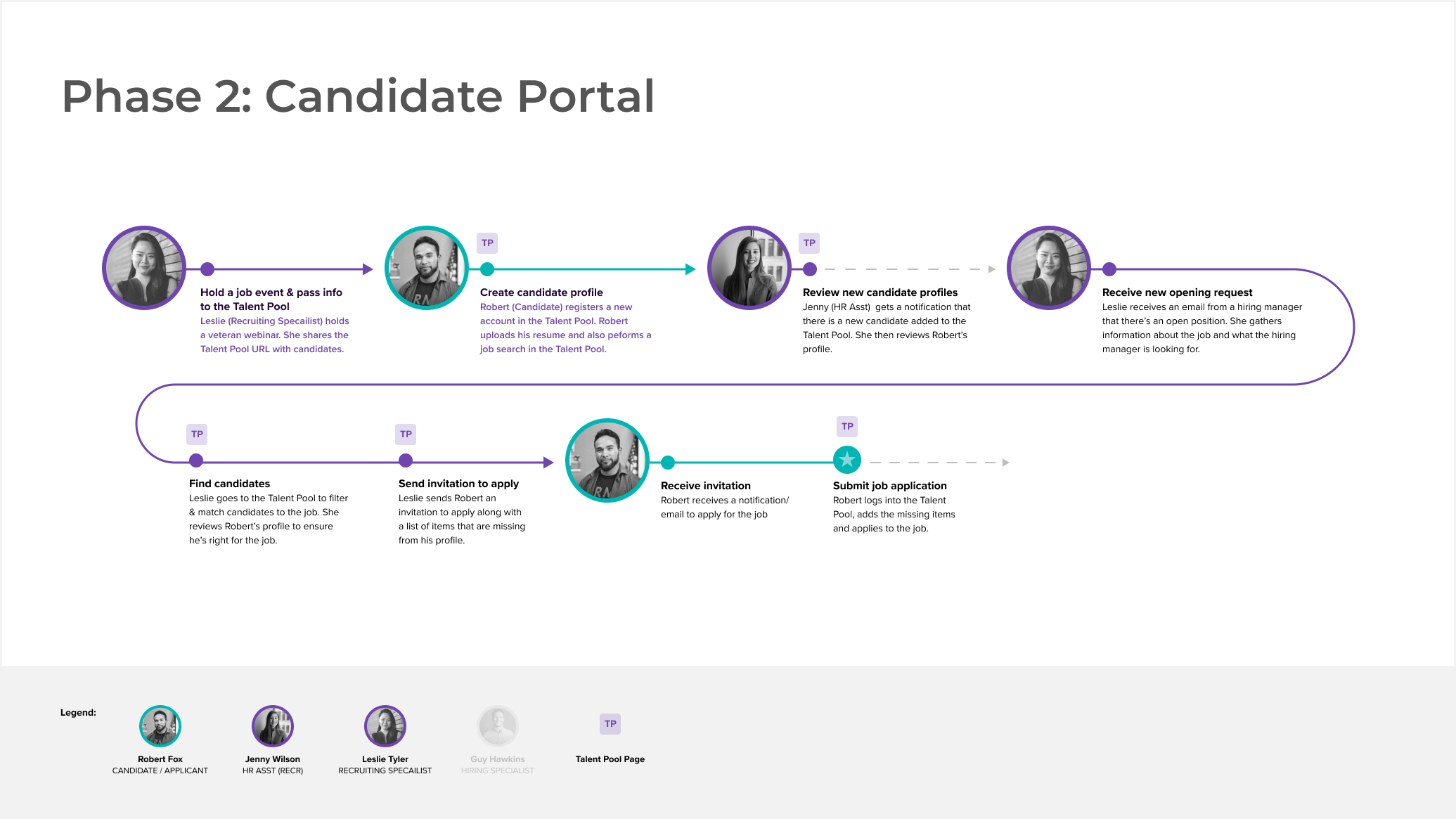
Phase 2: Candidate Portal
Role-Driven Design Process

Discover

Define Role

Ideate

Design
Roles
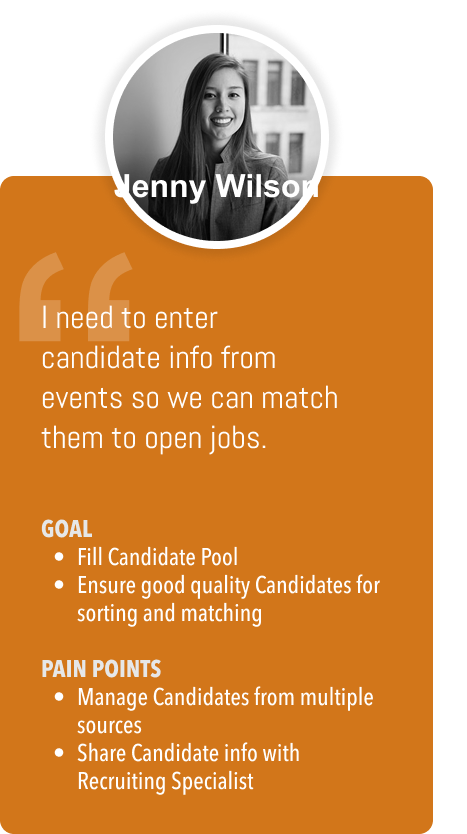
Recruiting Assistant
Supports recruiters by coordinating candidate communications and tracking application progress.
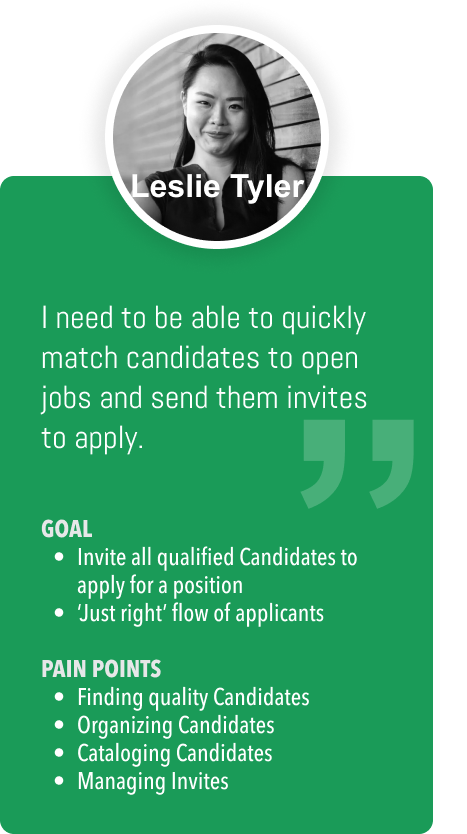
Recruiting Specialist
Sources candidates and manages applications through each hiring stage.
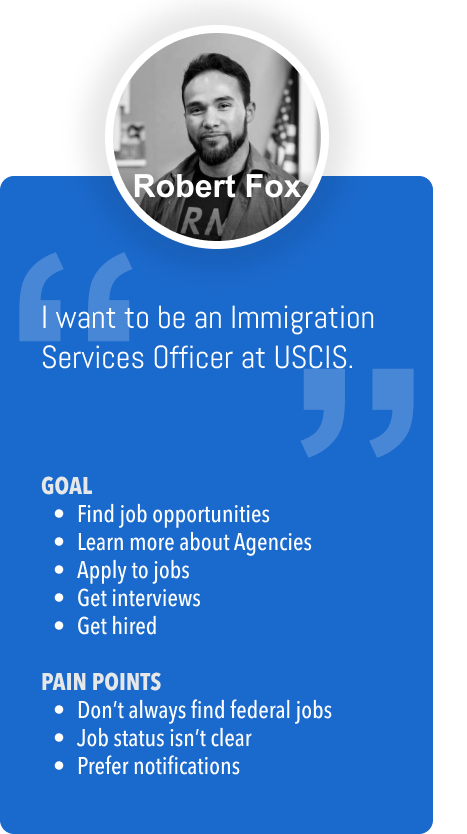
Candidates
Applies, tracks progress, and responds to communications throughout the process.
Recruiter Pain Points
Recruiters faced a fragmented process for posting openings and inviting candidates, while candidates received inconsistent or confusing application invitations.
Step 1: Recruiting Specialist is sent unclear information about job openings and candidates.
Step 2: Recruiting Specialist sends an email with unclear information to the candidate.
Step 3: Candidate is confused by the unclear information and submits an application.
Step 4: Recruiting Specialist receives the application.
Step 5: Recruiting Specialist manually handles offers and onboarding handoffs, where information is difficult to find or can get lost.


Phase 1: Candidate Application Flow
Overview
Phase 1 focused on enabling recruiters to manage new job openings efficiently, from entering requisitions to inviting candidates to apply. Mapped and optimized interactions among Recruiting Assistants, Recruiting Specialists, and Candidates.
Workflow with Talent Pool
The optimized workflow supported correct postings of openings and simple candidate application, leading to fewer errors, faster invite times, and more efficient handoffs between roles.
Step 1: Recruiting Assistant sends structured list of job openings and candidates to the Recruiting Specialist via the Talent Pool (TP).
Step 2: Recruiting Specialist sends a email with clear information to the Candidate via the TP.
Step 3: Candidate submits the application.
Step 4: Recruiting Assistant and the Recruiting Specialist review the application together.
Step 5: TP automatically handles offers and onboarding.


-
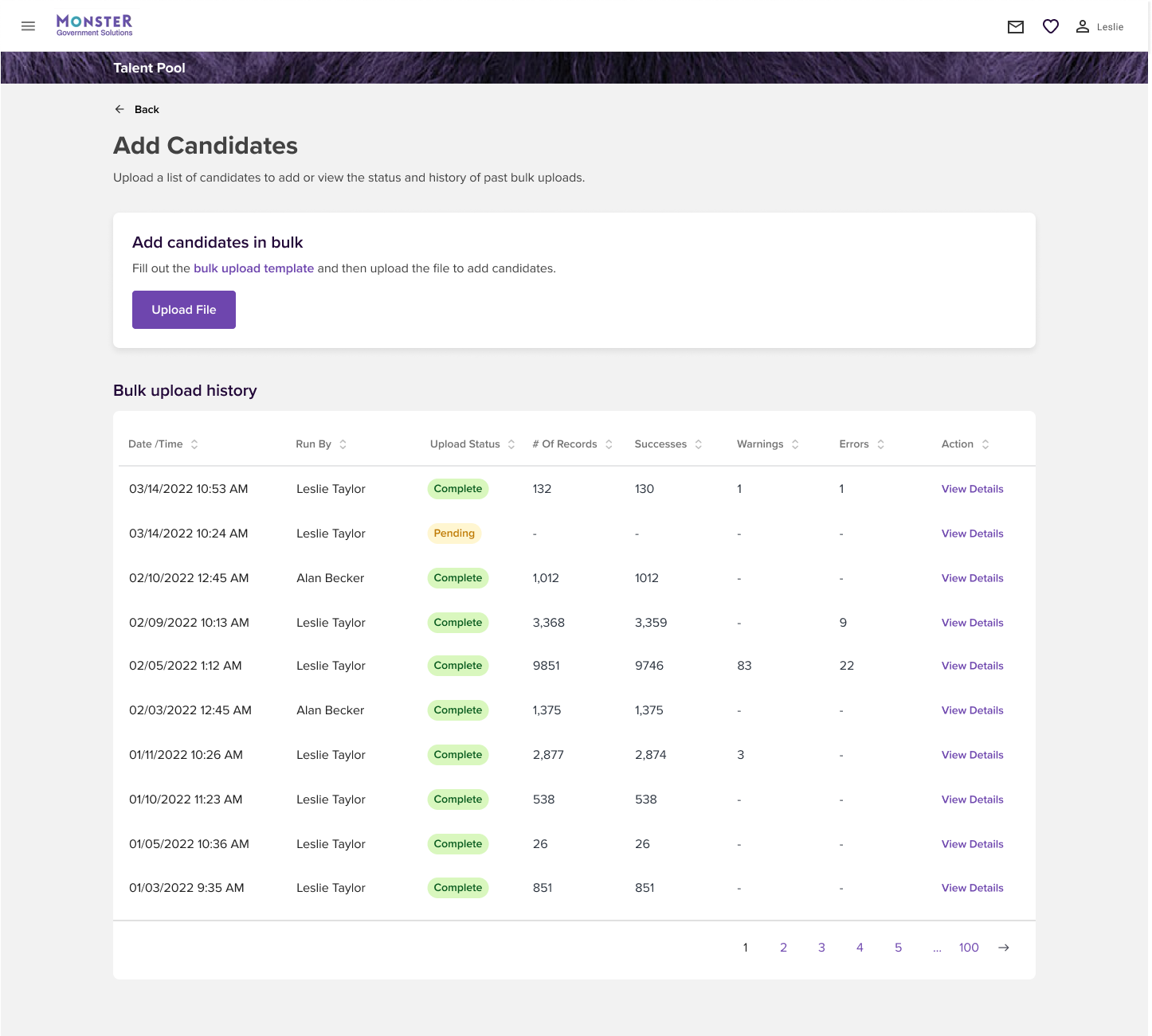
Populating the Talent Pool
Recruiting assistants can add and view the list of candidates and job openings they have organized.
-

Finding Candidates & Jobs
Recruiting Specialists can filter through a list of candidates or jobs.
-
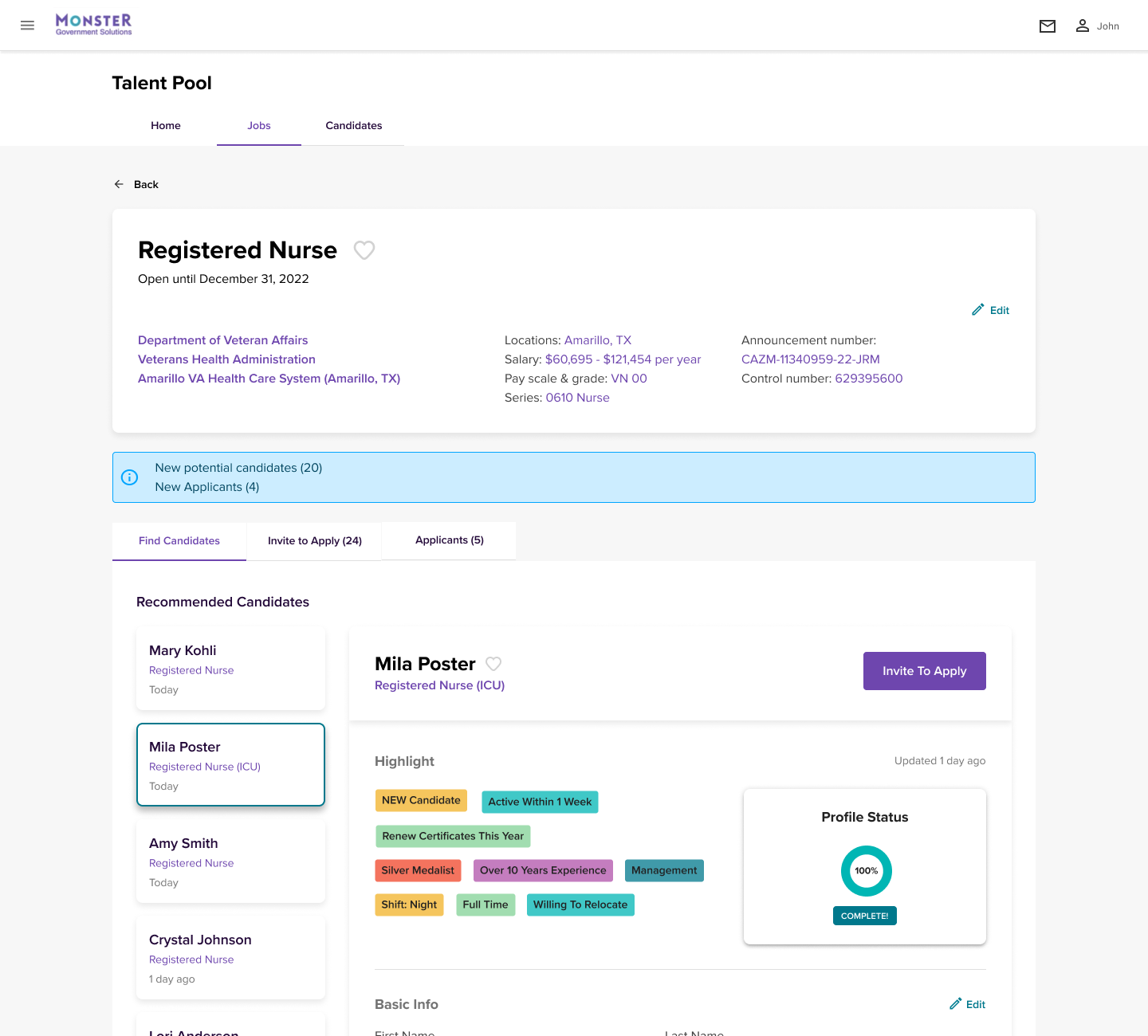
Evaluating Candidates for a Job Opening
Recruiting Specialists can get an at-a-glance view if a candidate is a suitable fit for a job opening.
-
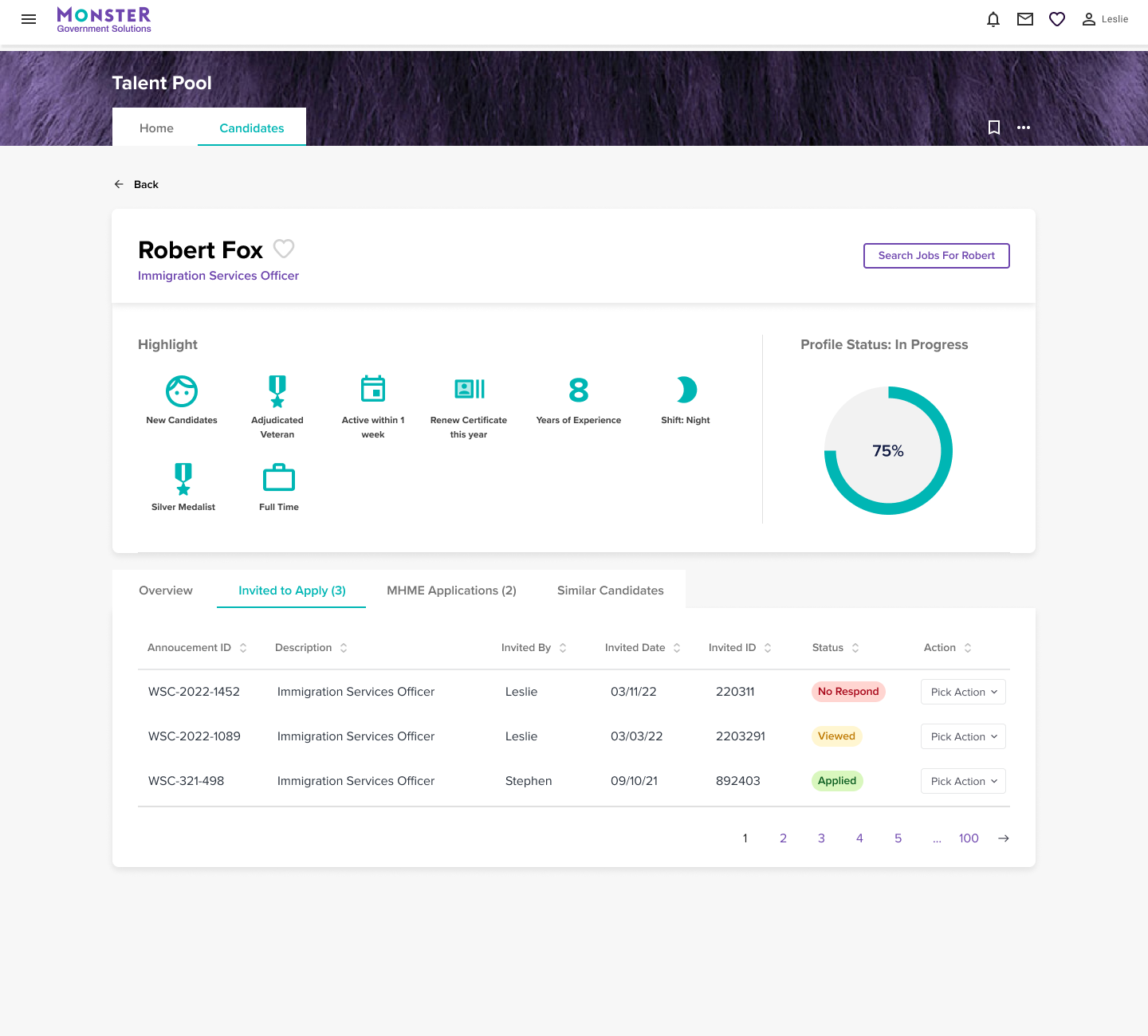
Tracking a Candidate Through the System
The Recruiting Specialist can view details about a Candidate as the Candidate moves through the system.
Phase 2: Candidate Portal
Overview
Without clear onboarding and review processes, candidate information was inconsistent, and hiring decisions were slowed. Focused on building a candidate portal, allowing Candidates to create profiles while improving the hiring workflow.
Outcome
The Talent Pool and Candidate Portal improved information accuracy and let candidates manage their profiles independently, while recruiters and hiring assistants followed a clear process for reviewing and inviting applicants using automated emails and notifications. Multi-role workflows reduced miscommunication.
Flow With Candidate Portal
Step 1: Recruiting Specialist shares the Talent Portal (TP) with the candidate.
Step 2: Candidate enters their information via the Candidate Portal (CP).
Step 3: Recruiting Assistant receives a notification via the TP.
Step 4: Recruiting Assistant sends a notification to the Recruiting Specialist via the TP.
Step 5: Candidate receives an email via the TP and submits an application for a job via the TP.
Step 6: The TP automatically handles offers and onboarding.



Design
A multi-step user flow connected Recruiting Specialists, the Candidate Portal, and Hiring Assistants through to application submission. The flow supported candidate profile creation, review processes, and invitations using automated notifications and system prompts, refining interactions to simplify profile setup, guide review actions, and promote efficient collaboration across roles.
Candidate Portal
The Candidate Portal gives Candidates a clear experience throughout the hiring process. It centralizes profile management, application tracking, assessments, and communications, making tasks easier to follow. Clarity, consistency, and timely feedback help Candidates stay informed while navigating multiple systems.
Results
The Talent Intelligence Platform unified recruiting systems into a single experience for specialists, assistants, managers, and candidates. It clarified workflows, reduced manual effort, and guided users through the hiring process. Recruiters managed candidates efficiently, managers gained earlier visibility, and candidates had clear communication and self-service, resulting in shorter hiring cycles and fewer errors.