Marriott International
Senior Manager, UX
February 2015 - June 2020
Loyalty Program
I led the digital experience for, Marriott Bonvoy, the world’s largest hotel loyalty program with over 200 million members. My primary responsibilities revolved around member-related features such as status tracking, reward tracking, reservations, targeted promotions, and account management.
The Marriott-Starwood merger
In 2016, Marriott International acquired Starwood Hotels & Resorts along with their loyalty program and its members. Over the course of three years, the merging of the programs was rolled out to members. During that time, I led the user experience in combining the member accounts. In 2019, Marriott Bonvoy, was finally announced.
Some of the initiatives included brand pull through, account linking, account merging, loyalty status, points conversion, rewards merging, reward redemption, and user education.
CASE STUDY
Project management
Agile & Waterfall to the test
For legal reasons, the first stage of the Marriott-Starwood digital rollout needed to be completed by a hard date or else the company would face enormous fines.
Marriott teams were all using Agile at the time, but teams that were part of this undertaking eventually switched to Waterfall because development wasn’t moving fast enough. Efficiency was key to success and was achieved with thoroughly vetted upfront requirements and a swimlane workflow.
Team dynamics
Even the best documentation and best design lose value due to stress. During the tense times of the Marriott-Starwood merger, I tried to not add to the stress by being highly strategic about in when and what features I could potentially be successful in standing up for the user while maintaining positive work relationships. I was highly sensitive to
One potential shortcoming of Waterfall is a factory feel and a sense lack of ownership. Team morale came in celebrating wins on how fast Post-it Notes were moving over lines on a whiteboard.
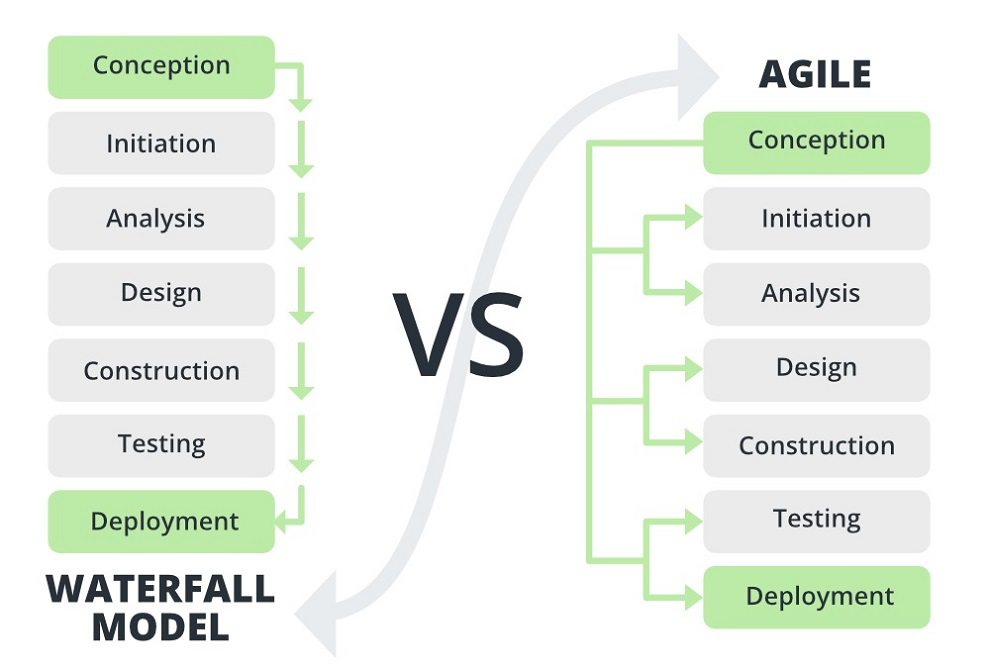
Switching from Agile to Waterfall mid-project
For the Marriott-Starwood merging, teams switched from Agile to Waterfall and all departments gathered in a hotel ballroom to collaborate more efficiently.
CASE STUDY
Design strategy
A $500,000 problem
Both Marriott Rewards and SPG granted free nights but the terminology and the flow in redeeming the reward was different. In one of the months, member confusion was identified as signification portion of a $500,000 problem.
Holistic solution
There was a major scramble across the company, and for the developers of the Loyalty team, the task was sized as a small. For the UX team, we had meetings with the reservations, marketing, operations team, and customer service teams. A holistic and strategic solution was needed. Ultimately, it came down to program branding, user education, modifications to the flow, and digital rollout solutions.
Over time, customer care calls went down and with it, the need for additional changes.
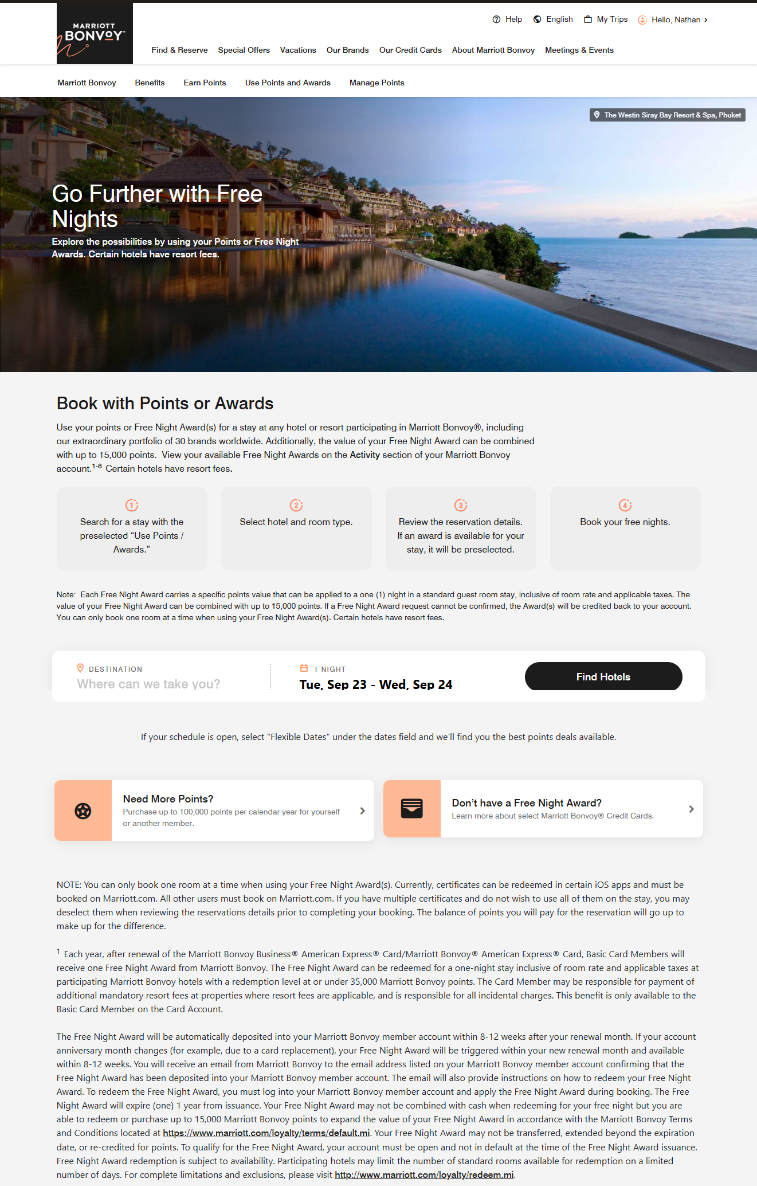
UI versus UX
The UI associated with the solution was largely this one screen, but the holistic solution required a product strategy requiring collaboration across the company
CASE STUDY
Solution vetting
The “Report a Missing Stay” feature
Three simple change requests came from the customer service team about a service where members can file a claim about points not being awarded for a stay. Curious, I reached out to the team asking the problems the changes were meant to solve.
Fragmented solutions
I could have easily designed the minor change requests and move on. But I decided to dig deeper and contacted the customer support team and discovered the issue was costing the company over $600,000 annually. Also, it could take up to 2 weeks with multiple back-and-forths to mark reports as resolved and sometimes not in favor of the customer.
The highest-spending travelers worldwide are the ones who use this feature most. I wanted to make them happy and have a business case on how we could.
Targeted solutions
There were late-night calls with the team in India but we were able to identify over 30 actionable solutions. In the end, we saved the company $85,000 annually, and in some cases, reduced the wait time from two weeks to zero seconds.
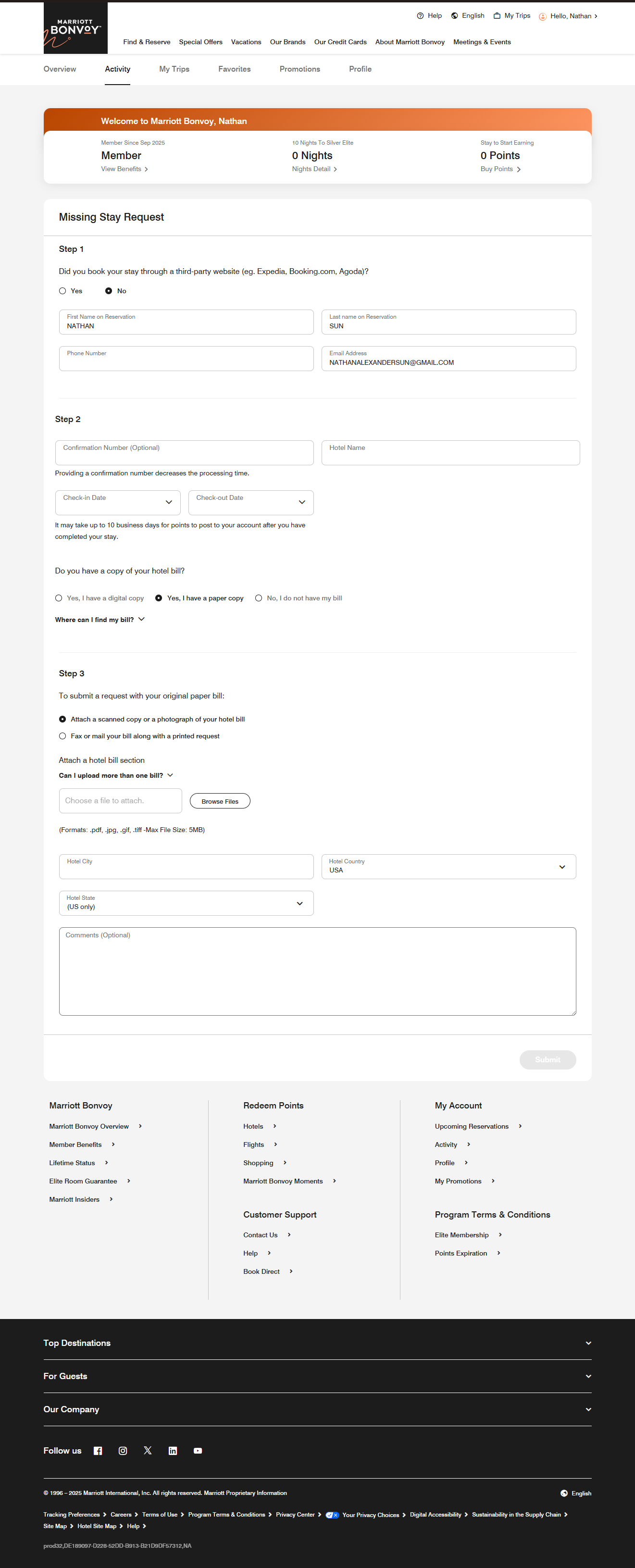
From three change requests to thirty
The customer care team asked for three change requests, but after further analysis, I found a total of 30 changes.
CASE STUDY
Opportunity recognition
Marriott Bonvoy Promotions
Promotions are targeted and personalized marketing campaigns designed to incentivize desired customer behavior. One promotion can generate over $50 million in revenue.
Approval to explore
When the promotion team made a simple visual ask, I noticed an opportunity for a streamlined user flow which I thought might be feasible from a technical and legal perspective that would still satisfy business requirements. I spoke with the product owner and together we explored the idea.
Feature design
Whenever the member wanted to sign up for a promotion, they went through a four step process which always required the user to enter their password because on the Marriott site, the “Remember Me” feature doesn’t save the user’s password. The streamlined registration flow was a single click from an email without the need for authentication.
Feature authorization & results
I proposed changes to the promotions team and got budget approval. As a result of the enhancements, registrations increased by up to 30%.
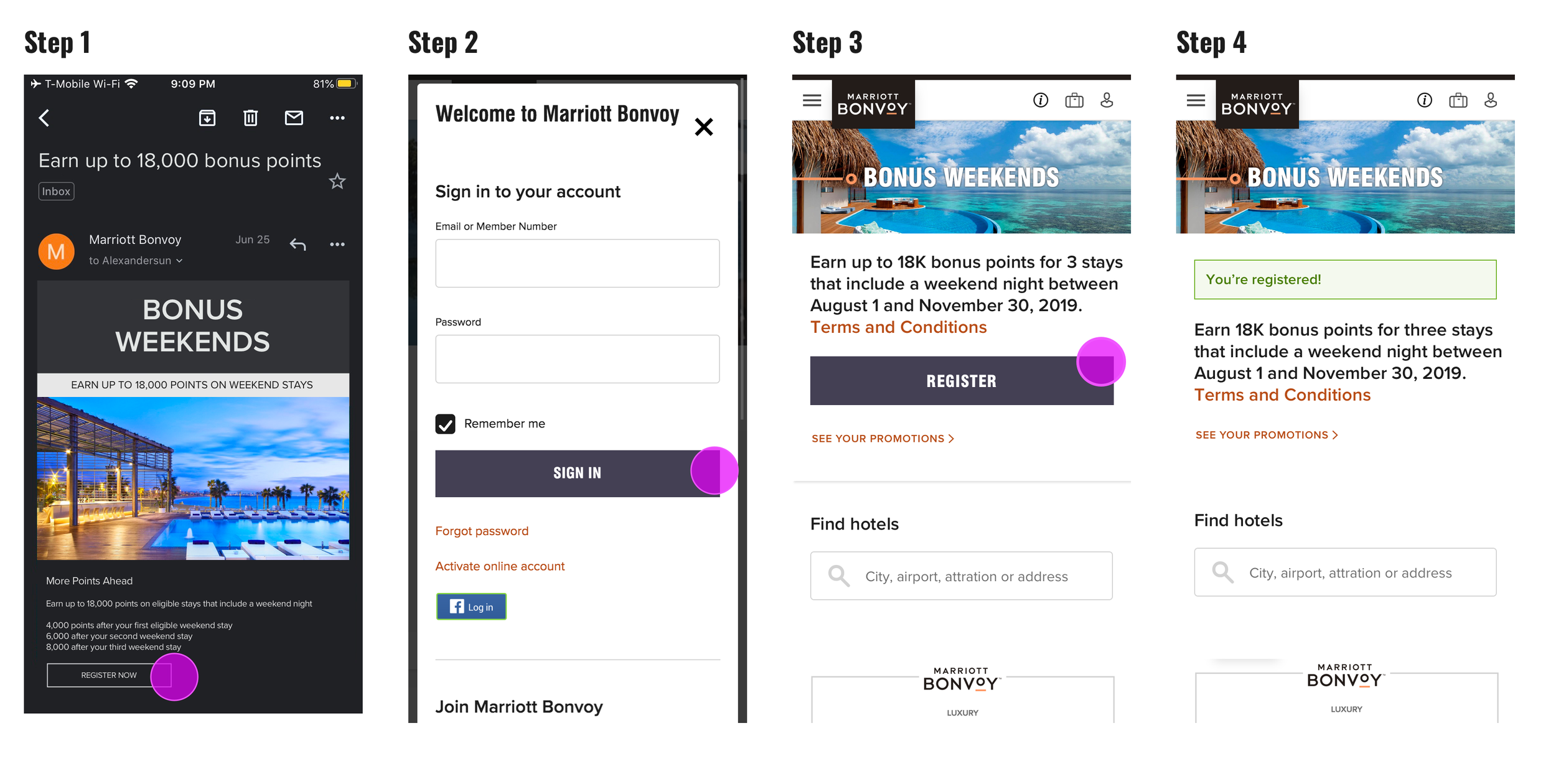
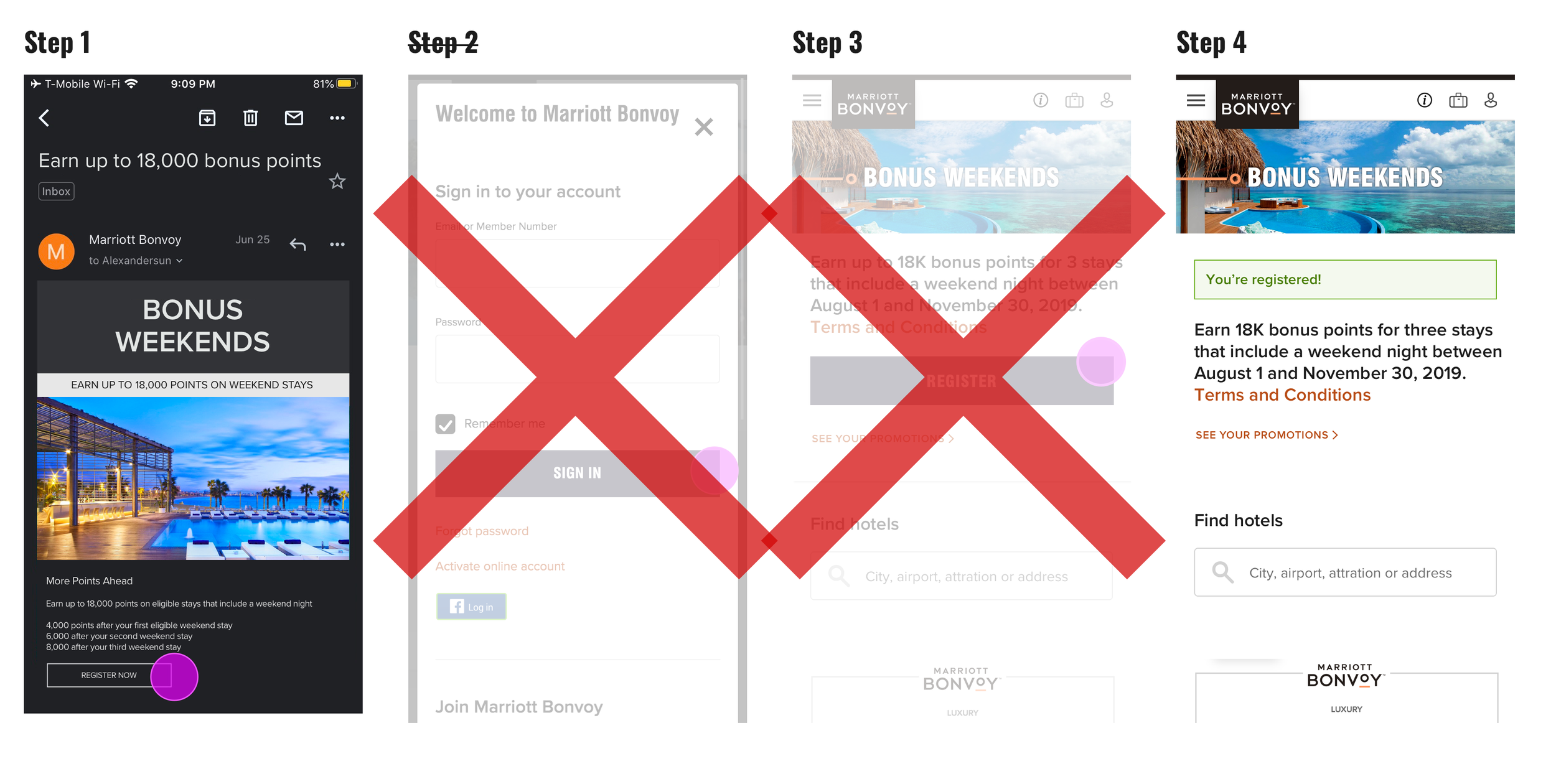
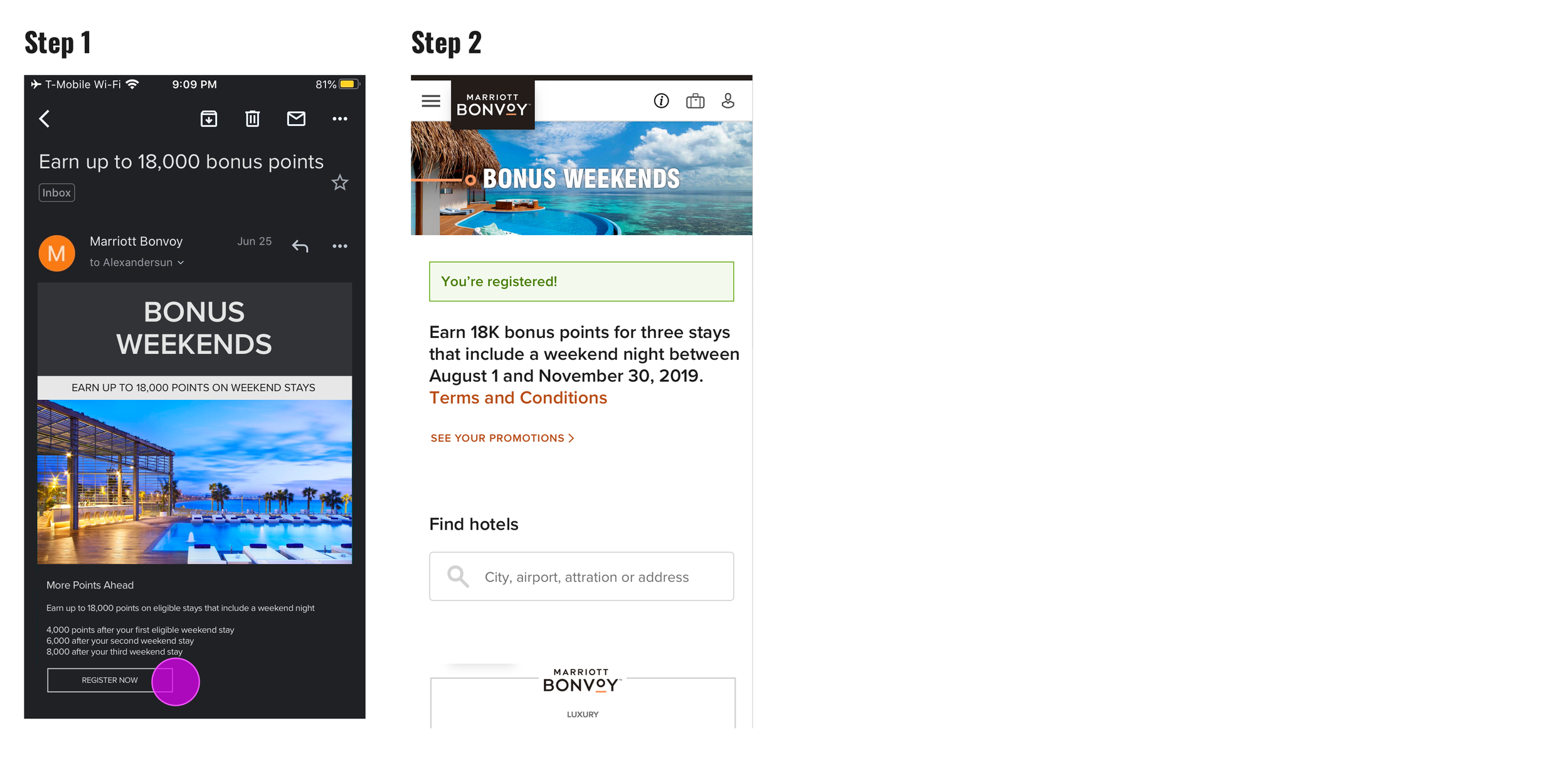
Managing complexity to achieve simplicity
Streamlining the promotion registration flow required the collaboration between the promotions team, developers, and the legal team.