Savings & Revenue through Information Architecture
Hypothesis
Legacy user interfaces contain friction points with high-impact operational savings.
Challenges
Large site makes it difficult to find opportunities
Potential risks exist with even the smallest design changes
Cost-effectiveness makes ROI difficult to achieve
Some legacy designs hadn’t been updated for nearly a decade.
Design Process

Collaborate

Design

Collaborate More
Design
High Value Targets
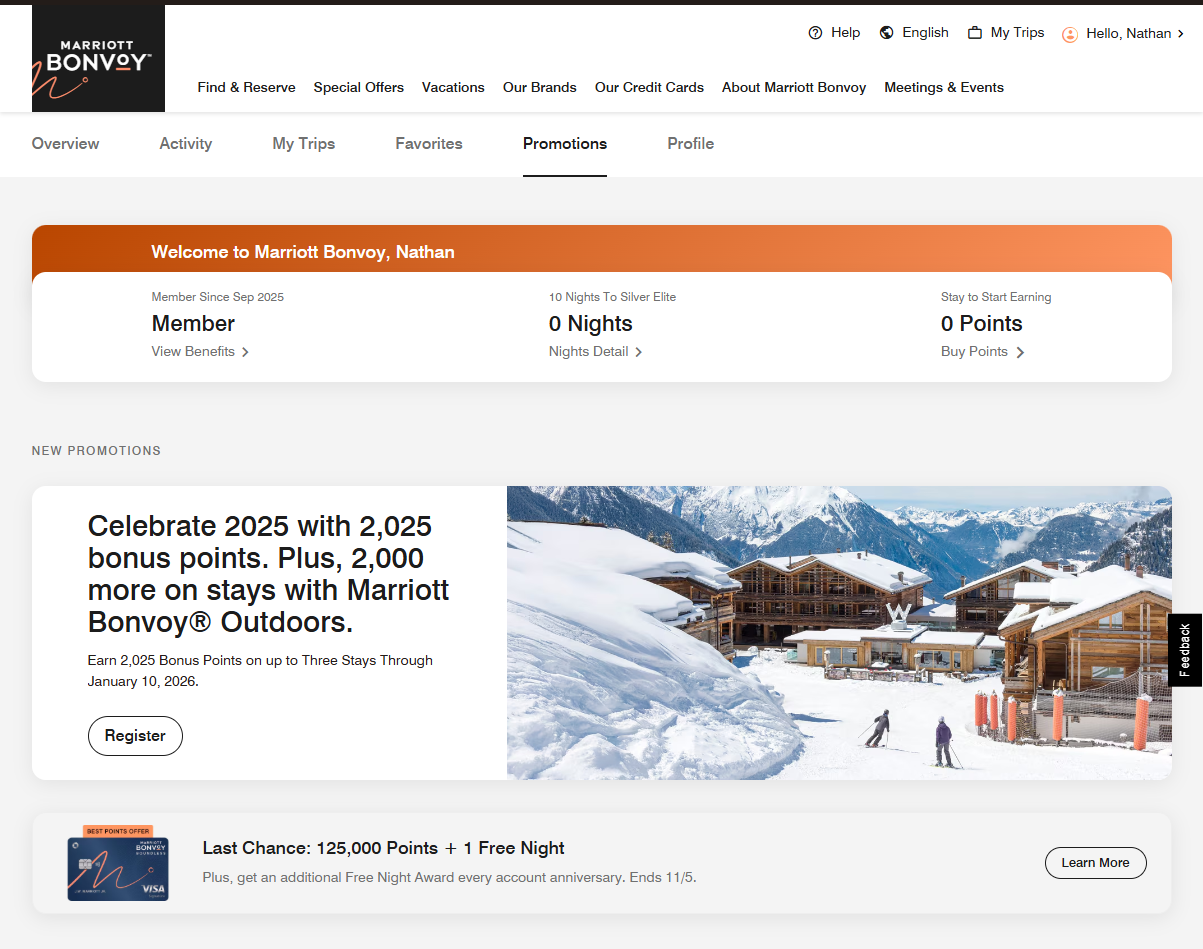
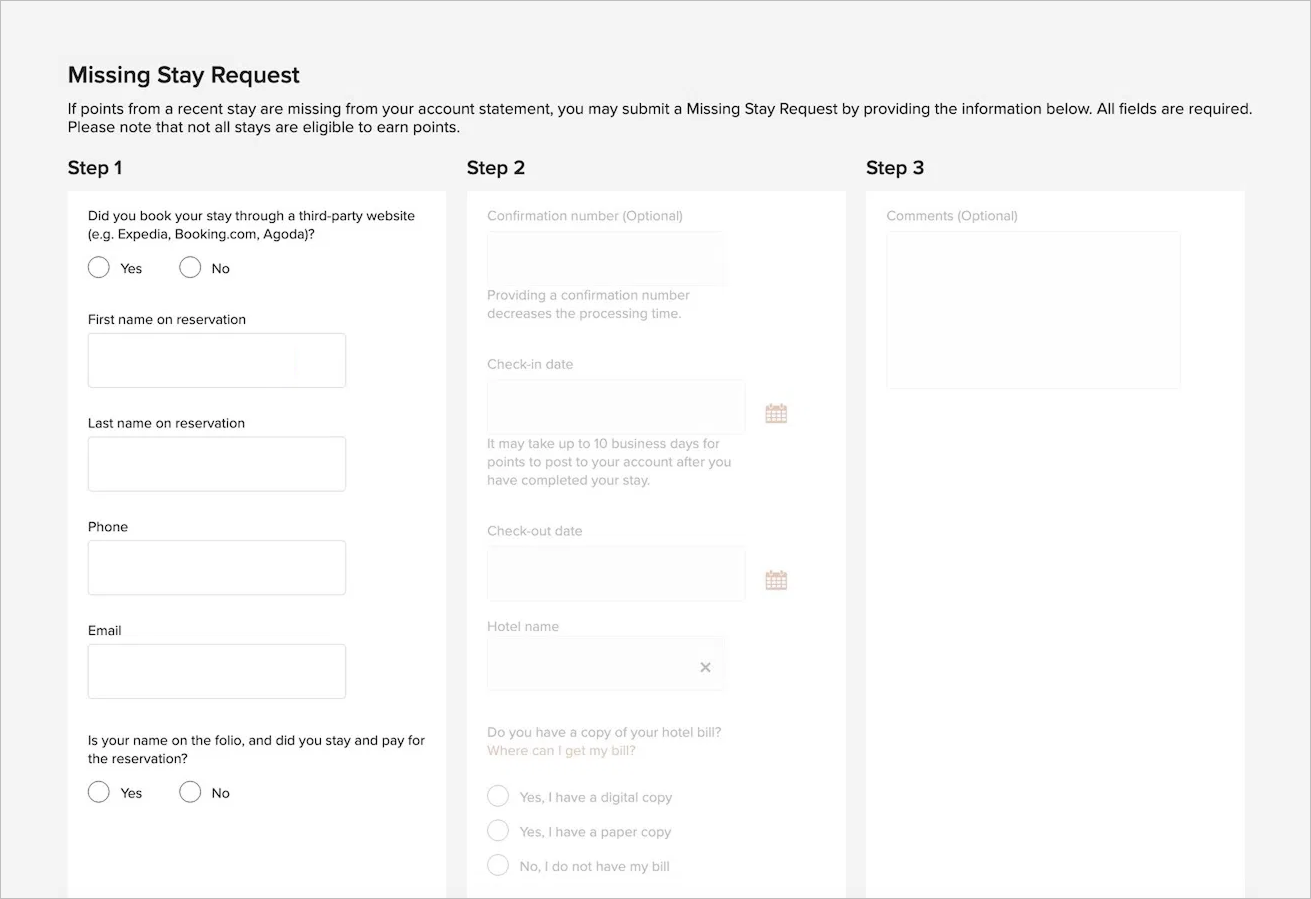
I identified three areas with the highest potential ROI.
-
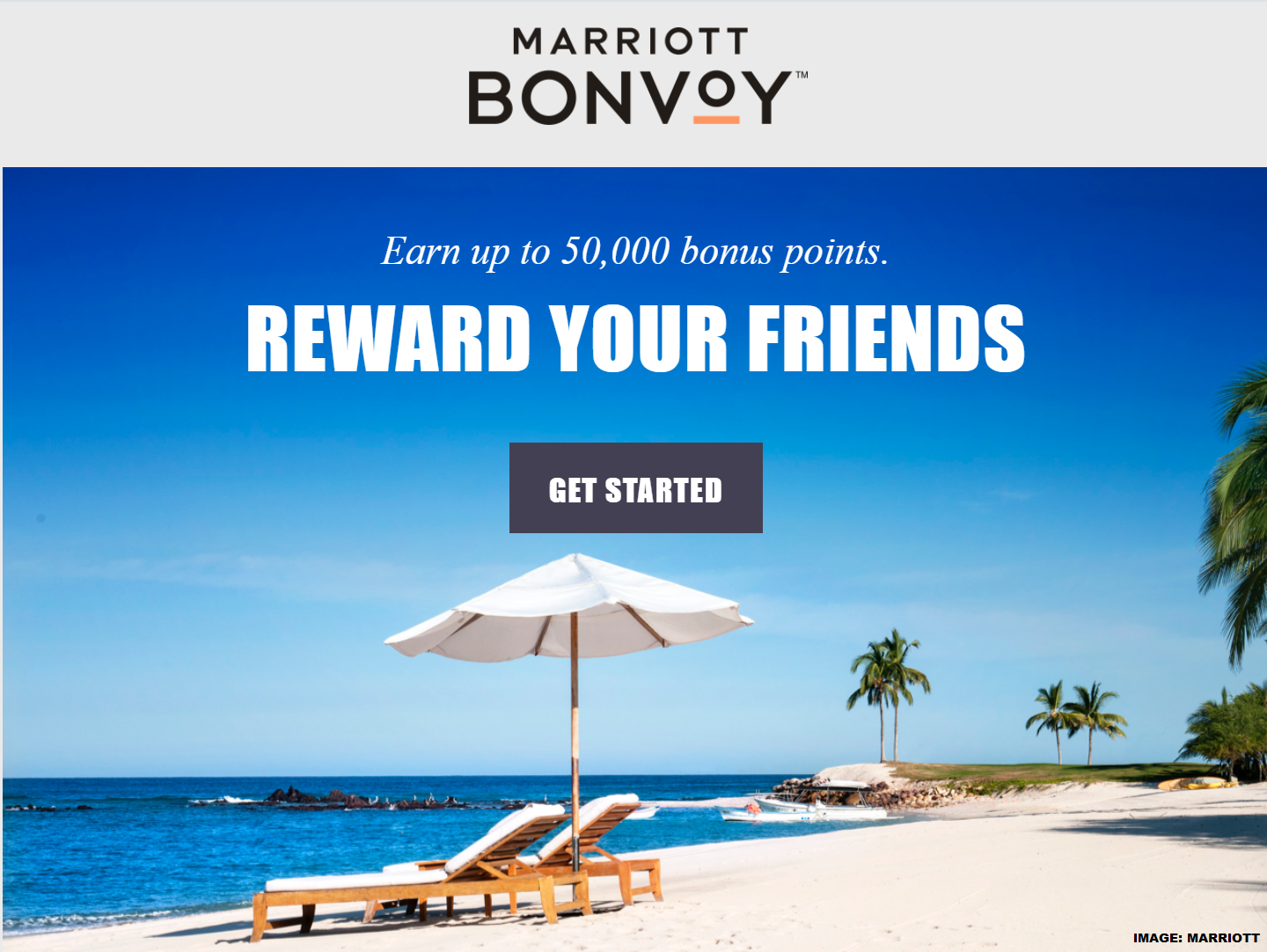
Member Registration
-

Customer Service
-

Promotions
Results
$120,000+
Annual Cost-Savings
+10%
Promotion Registrations
-2 weeks
Customer Support Ticket Resolution Time
CASE STUDY
Promotions
What Promotions Are
Promotions are time-limited offers that members can complete to earn a reward. Importantly, each member is eligible for a different set of promotions based on their account and activity, meaning the experience is highly personalized. Members who weren’t eligible for certain promotions couldn’t see them, preventing comparisons or frustration over differences in offers between members.
Legacy Context
The promotion pages originated from a straightforward request by the promotions team. They wanted a page where each member could see the promotions available specifically to them and register for them. Each member saw a personalized set of promotions, but it was implemented as a simple solution without much design or IA consideration. The promotions team could easily populate the page whenever a new promotion ran, and no ongoing maintenance was required by the digital loyalty team.
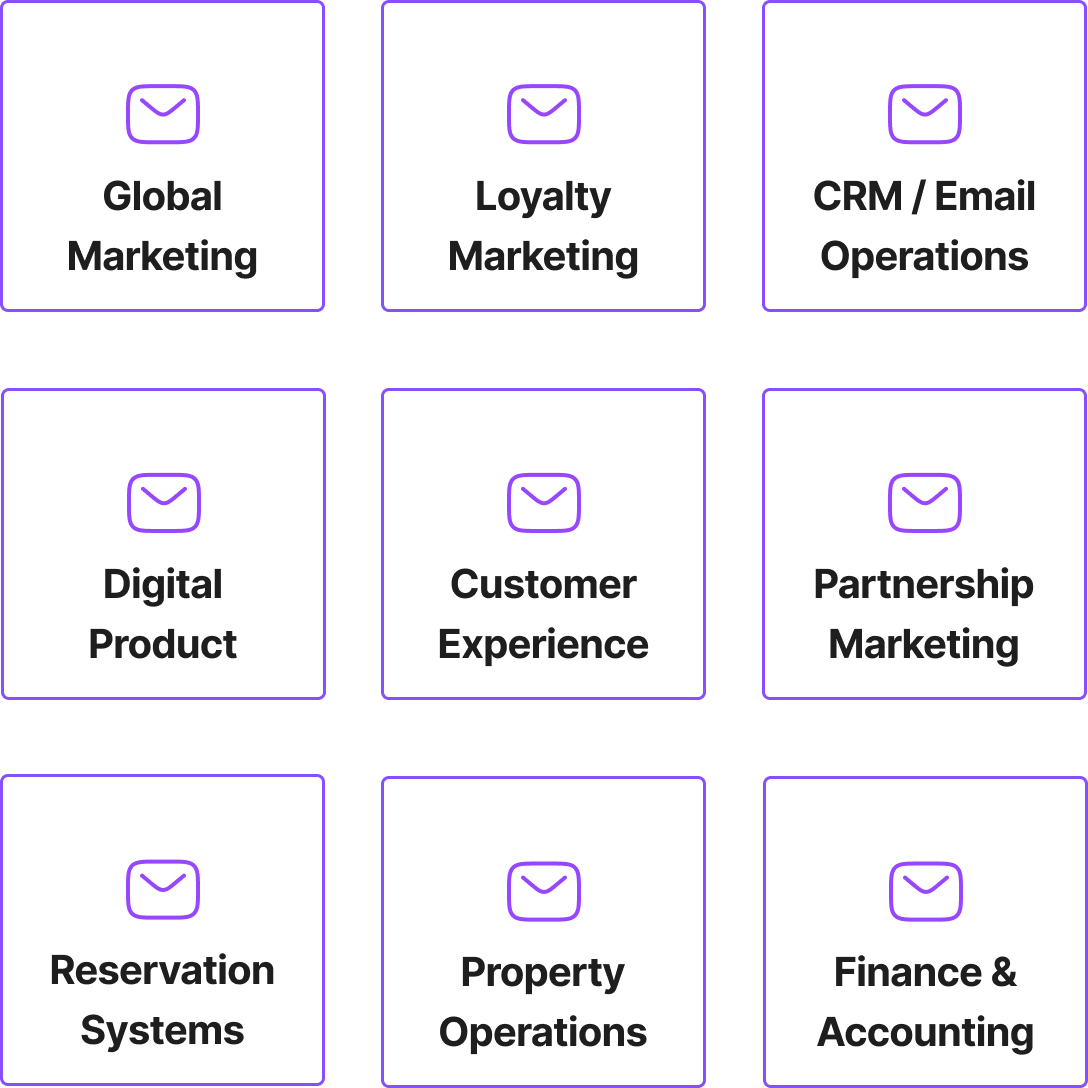
Email is one channel within the omnichannel IA, but it’s used by multiple departments. Identifying where inefficiencies might exist across all channels and all teams was no easy task.
Context & Goal
I identified an opportunity to improve the user-facing promotion workflow because even a single promotion could generate $50M+ in revenue. By examining legacy workflows, I wanted to uncover potential revenue that could be captured if the process was made more accessible for members.
Approach
When I started working on the IA for promotion registration, I considered the entire member experience, not just the website. I wanted the flow to align with and support the broader omnichannel experience. I identified the opportunity independently and focused on making the registration process more streamlined for members.
Investigation
Although the IA improvement may seem simple, it required careful investigation and cross-team coordination. Since promotions are personalized, it was natural to assume members would need to log in. To validate the solution, I engaged with four departments: developers to confirm technical feasibility, the promotions team to ensure they were comfortable with the approach, legal to check for compliance concerns, and DevSecOps to review potential security issues. This process involved a lot of investigation, as the solution was not straightforward, but ultimately enabled a streamlined, high-impact user experience.
Before
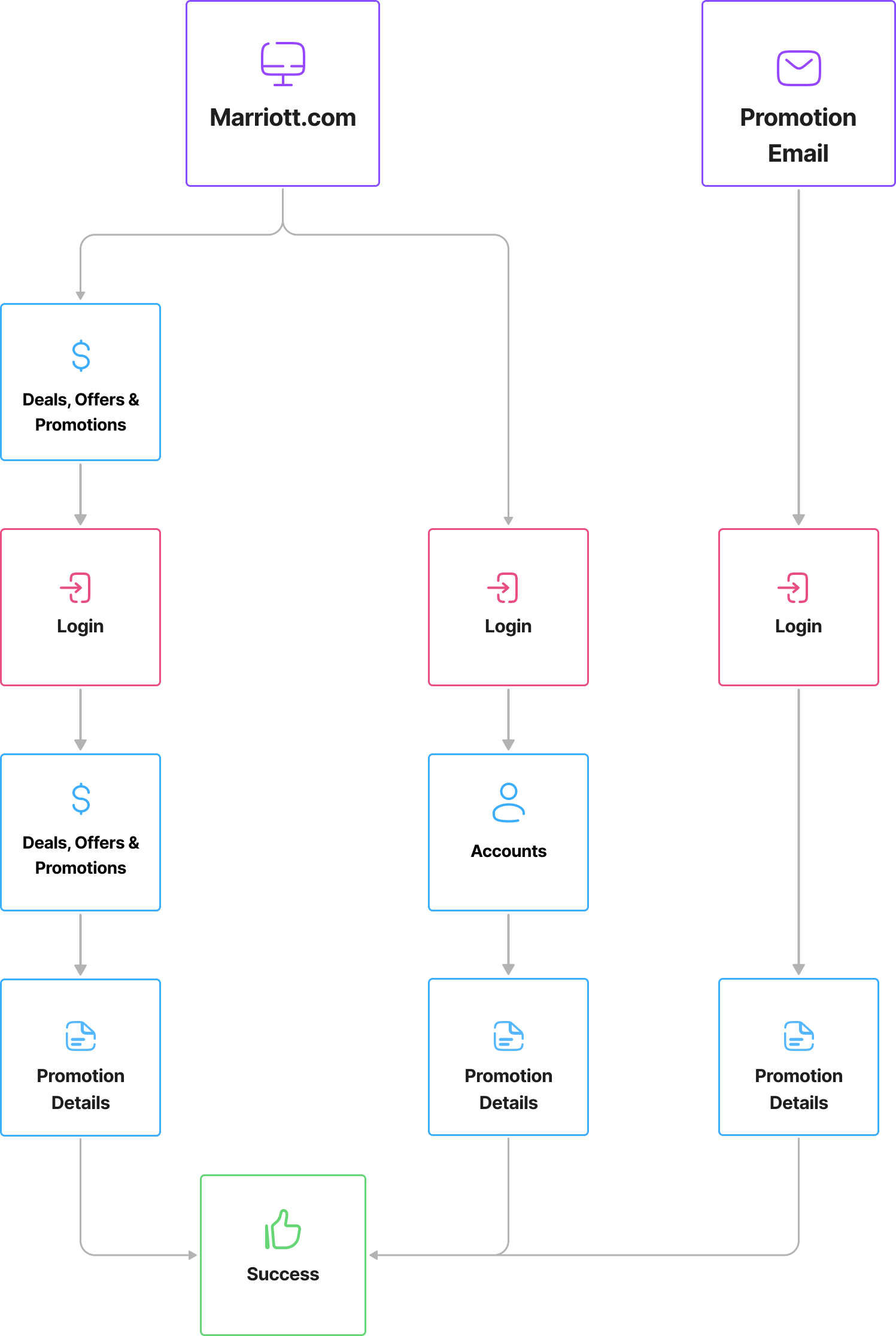
Members could reach the promotion detail page through multiple entry points: the Deals, Offers & Promotions page, account management, and email. The email entry point existed but was not obvious, as it was outside the website. Reaching and registering for a promotion required two page loads, authentication, and four clicks, creating friction and reducing registration rates.
Steps Before the Changes
Member receives a promotion email and clicks the link
Taken to Marriott.com (page load)
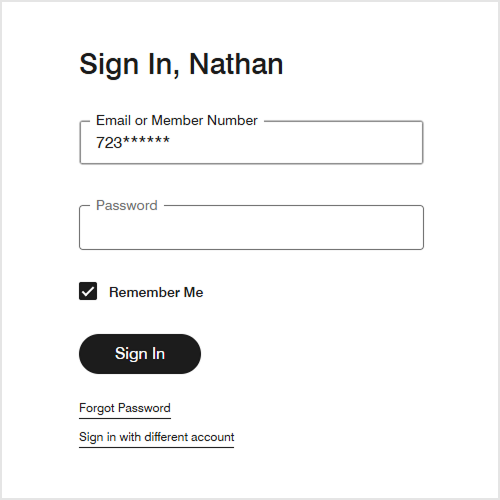
Enters email and password (Remember Me feature never remembers password)
Taken to the Promotions page (page load)
Clicks Register on the Promotions page
Member lands on Success page (page load)
Design
While analyzing the workflow, I focused on the primary use case and considered the broader omnichannel experience. My goal was to simplify the process by reducing unnecessary steps, particularly the one requiring users to enter their credentials each time they registered for a promotion because the “Remember Me” function never saves the password. At first glance, this step seemed necessary since it appeared logical that authentication would be required to confirm eligibility and prevent members from registering for promotions they weren’t eligible for.
Unlike other sites, the “Remember Me” feature does not save the user’s password on the Marriott website resulting a major friction point.
After
After the flow was simplified, members could register for a promotion with a single click directly from the email, without any authentication required, while ineligible members still couldn’t view promotions they weren’t eligible for. This change dramatically reduced friction and increased registration rates, aligning the website experience with the broader omnichannel strategy while addressing the 90% use case.
Steps After the Changes
Member receives a promotion email and clicks register
Member lands on Success page (page load)
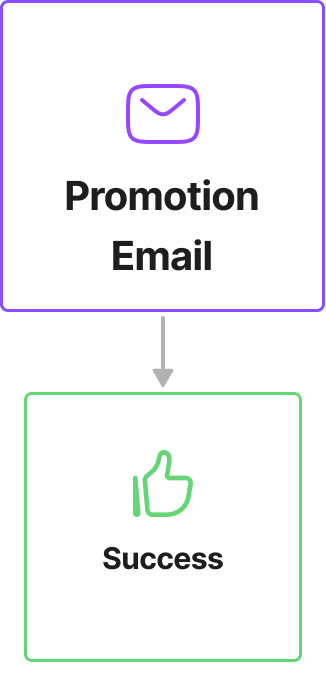
Although each promotion is personalized to an individual, page loads and authentication were able to be bypassed without comprising the integrity of the promotion system.

As with all the other changes, the solution was only possible through the involvement of many departments.
Cross-Functional Collaboration
Implementing this IA improvement required input from multiple teams to ensure the solution was feasible, compliant, and secure:
Developers: Confirmed technical feasibility of the single-click registration.
Promotions Team: Ensured they were comfortable with the new approach.
Legal: Reviewed for any compliance concerns.
DevSecOps: Verified there were no security issues with removing authentication for this flow.
Key Takeaways
This project highlighted that even small IA improvements can have a significant impact on both revenue and efficiency. It reinforced the importance of considering the full user journey across channels, rather than focusing solely on a single touchpoint. Personalized experiences, like promotions, can make seemingly non-obvious solutions obvious, requiring careful analysis and creative problem-solving.
Cross-team collaboration is critical, even for changes that appear simple. Coordinating with developers, the promotions team, legal, and DevSecOps ensured the solution was technically feasible, compliant, secure, and aligned with business goals. Taking initiative to identify high-impact opportunities and thinking strategically about how to implement them can transform legacy workflows and deliver measurable results.
It highlights my approach to identifying high-impact opportunities and designing efficient user experiences.